Gas Safety Versus Boiler Service Explained

A boiler can heat your home perfectly well and still need attention. That is where confusion often starts. Gas safety versus boiler service is not a choice between two names for the same job. They have different purposes, different paperwork and, for landlords, different legal implications.

For homeowners, understanding the difference helps you keep your boiler efficient and spot when to call a qualified engineer. For landlords, it helps avoid a missed compliance deadline that could put tenants at risk and create serious problems. Here is the straightforward version.

What is a gas safety check?

A gas safety check is a formal inspection carried out by a Gas Safe registered engineer. Its main purpose is to confirm that gas appliances, pipework and flues are safe to use on the day of the visit.

The engineer will inspect relevant gas appliances, such as a boiler, gas fire or cooker where included in the appointment. They will check that appliances are installed correctly, have adequate ventilation, burn gas safely and remove combustion gases properly through the flue. They will also look for signs of unsafe operation, including gas leaks and incomplete combustion.

For a rented property in England, landlords must arrange a gas safety check at least every 12 months for gas appliances and flues they provide. Once the check is complete, the landlord receives a Gas Safety Record, often known as a CP12 certificate. A copy must be given to existing tenants within 28 days and to new tenants before they move in. Landlords should also keep their records for at least two years.

The legal duty sits with the landlord, even if a managing agent arranges the visit. Tenants should allow reasonable access, but it is the landlord’s responsibility to make sensible attempts to gain it and keep a record of those attempts.

Homeowners are not normally required by law to have an annual Gas Safety Record for their own property. Even so, an annual gas safety check can be a sensible extra precaution, particularly where there is an older gas fire, a gas cooker, or any concern about the condition of the installation.

What happens during a boiler service?

A boiler service focuses on the boiler itself. It is preventative maintenance, designed to keep the appliance working reliably, efficiently and safely between winters.

During a typical annual service, a qualified engineer checks the boiler’s operation and controls, examines key components, tests the flue and combustion, and looks for leaks, corrosion, unusual wear or faults developing inside the appliance. Depending on the model and its condition, this may include cleaning parts such as the condensate trap or burner area where appropriate.

The exact work varies by boiler make, model and age. A good service is not simply turning up, looking at the pressure gauge and leaving. It is an opportunity to find smaller issues before they become a no-heating emergency on a cold West Yorkshire morning.

An annual service can also matter for your manufacturer’s warranty. Many boiler warranties require servicing at the intervals set out by the manufacturer, usually once a year, and you may need evidence that it has been completed. Check the terms for your own boiler rather than assuming all warranties work the same way.

Gas safety check versus boiler service: the key difference

The simplest distinction is this: a gas safety check confirms whether gas appliances are safe, while a boiler service maintains the boiler and checks how well it is operating.

There can be overlap. A boiler service includes important safety checks, and a gas safety check may identify a boiler fault. But one appointment does not automatically count as the other. A landlord gas safety visit may not include the full maintenance work needed for a boiler service, while a boiler service does not automatically produce the formal Gas Safety Record required for a rental property.

If you are a landlord, ask clearly for both services where both are needed. Confirm that the engineer will issue the correct paperwork for the gas safety check and retain your boiler service record separately. This avoids the all-too-common assumption that an annual boiler visit has covered every requirement.

Do landlords need both every year?

In most cases, yes. The annual gas safety check is a legal requirement where a rental property has gas appliances or flues covered by the regulations. The boiler service is not the same statutory requirement, but it remains a practical part of looking after the property, reducing breakdown risk and meeting warranty conditions where applicable.

A poorly maintained boiler can mean a tenant without heating or hot water, an avoidable repair bill and a difficult call-out at the worst possible time. Regular servicing gives an engineer the chance to identify deterioration before it reaches that point.

There are situations where the timing can be made easier. If your gas safety check and boiler service are both due around the same time, booking them together can reduce disruption for tenants and make your records easier to manage. That does not mean the engineer should rush the work. It means you have one planned visit with the right scope agreed in advance.

Landlords should also remember that gas compliance is only one part of their responsibilities. Electrical safety checks and, where supplied appliances are involved, PAT testing may also be needed. Keeping these dates organised can feel like a lot, especially across several properties. A maintenance plan that brings cover and compliance support together can remove much of that administration.

What homeowners should arrange

For most homeowners, an annual boiler service is the starting point. It supports reliable heating, may protect your warranty and gives you a clear record of professional maintenance.

Consider an additional gas safety check if your home has several gas appliances, you have recently moved in, the property has an older installation, or you simply want reassurance that all relevant gas appliances and flues have been inspected. It can be especially worthwhile after building work near a flue or when replacing an appliance.

Do not wait for the annual appointment if something seems wrong. Book an engineer promptly if you notice any of the following:

  • A yellow or orange flame instead of a crisp blue flame on a gas appliance.
  • Soot, staining or scorch marks around an appliance.
  • A pilot light that repeatedly goes out, unusual boiler noises or a boiler that regularly loses pressure.
  • Headaches, dizziness or nausea that seem worse when an appliance is in use.

If you suspect a gas leak, smell gas, or think carbon monoxide may be present, act immediately. Turn off the gas supply if it is safe to do so, open doors and windows, leave the property, and contact the relevant emergency service. Do not use electrical switches, naked flames or appliances until the situation has been assessed.

A working carbon monoxide alarm is another sensible layer of protection, but it is not a replacement for professional inspection or servicing. Follow the manufacturer’s positioning and testing instructions, and replace the alarm by its expiry date.

Choosing the right engineer and keeping records

Whether you are booking a one-off visit or arranging ongoing cover, use an engineer who is Gas Safe registered and qualified for the type of appliance being inspected. Gas work is not a job for guesswork or a general handyman.

Keep your paperwork somewhere easy to find. Homeowners should retain boiler service records for warranty and future sale purposes. Landlords should keep the Gas Safety Record, proof of service, and a simple diary of future due dates. Photographing documents is useful, but make sure the image is clear and backed up.

For households and landlords who prefer predictable costs, No Hassle Heating offers local maintenance and breakdown cover across West Yorkshire, with annual boiler servicing included on relevant plans and support when an unexpected problem arises. The right level of cover depends on the age of your boiler, the systems you want protected and whether you manage a rental property.

Make the next appointment do the right job

When booking, do not just ask for “a boiler check”. Say whether you need a boiler service, a landlord gas safety check, or both. Provide the boiler make and model if you have it, mention any other gas appliances, and tell the engineer about faults or warning signs you have noticed.

That small bit of clarity means the visit can be properly planned, the correct checks can be completed and the right documents can be issued. It is a simple way to protect your heating, your tenants or household, and your peace of mind before a minor concern becomes an urgent problem.
What Causes Cold Radiators? Common Fixes

A radiator that stays cold while the heating is on is more than an annoyance on a chilly West Yorkshire morning. It can mean wasted energy, rooms that never feel comfortable and, in some cases, an issue that needs attention before it becomes a bigger repair. So, what causes cold radiators? The answer often lies in where the radiator is cold and whether the problem affects one radiator or the whole property.

A cold radiator is not always a boiler fault. Air trapped in the system, a stuck valve or sludge inside an older radiator are all common causes. Start by noticing the pattern of the cold area, then make a few safe checks before booking an engineer.

What causes cold radiators in different places?

The position of the cold patch gives a useful clue. A radiator that is cold at the top needs a different fix from one that is cold at the bottom, while a radiator that is cold all over can point to a control, valve or circulation problem.

Cold at the top: trapped air

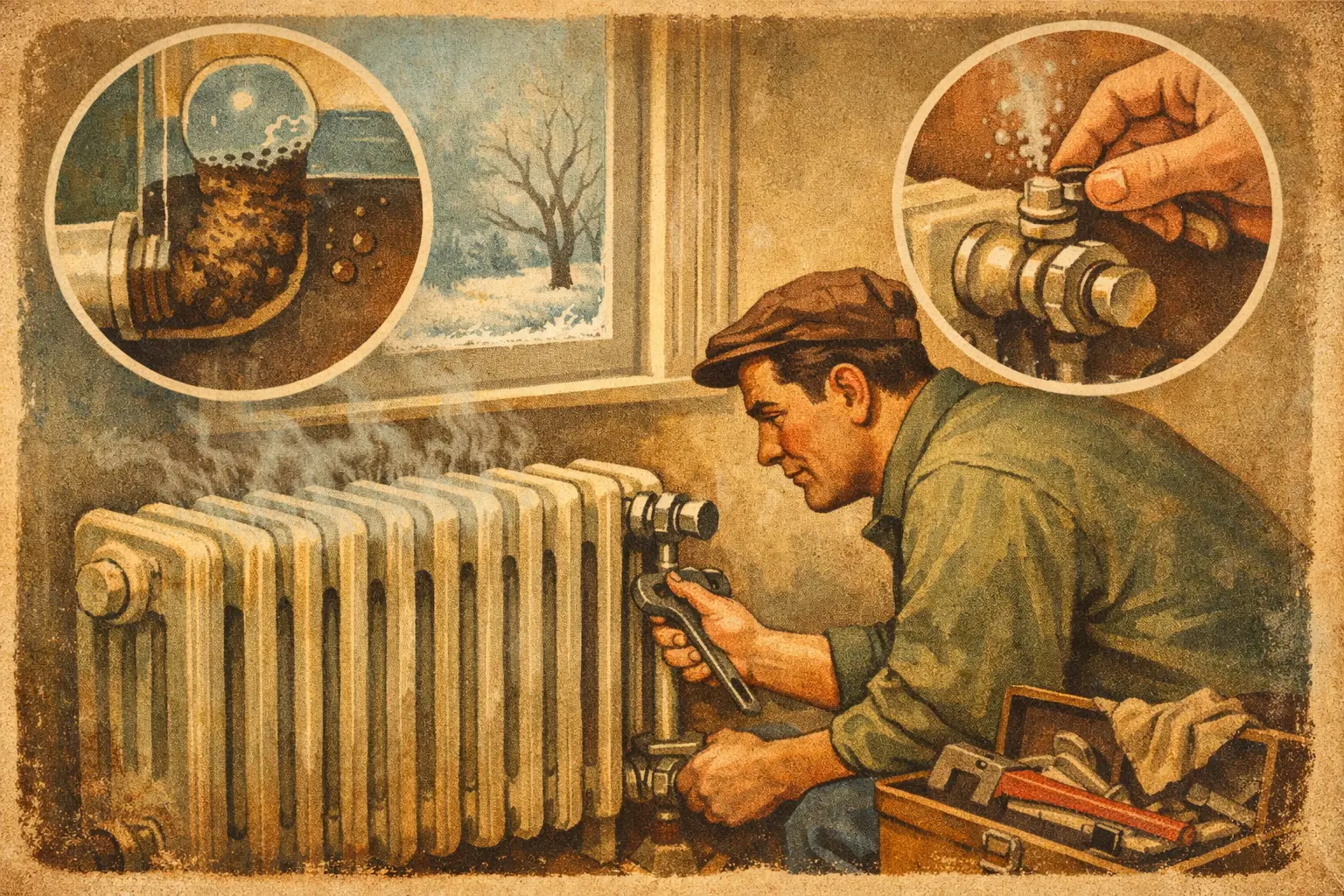
If the bottom of the radiator is warm but the top is cold, there is usually air sitting inside it. Air rises above the water in the radiator and prevents hot water from filling the upper section.

Bleeding the radiator may solve this. Turn the heating off and allow the system to cool first. Use a radiator key, hold a cloth beneath the bleed valve and turn it very slowly until air stops hissing and a small amount of water appears. Close the valve securely, but do not overtighten it.

If you have a sealed system, check the boiler pressure afterwards. Bleeding can lower it slightly, and many systems need the pressure returned to the range shown in the boiler instructions. If you are bleeding radiators often, though, do not treat it as a routine fix. Frequent air in the system may indicate a leak, a failing component or another fault that should be investigated.

Cold at the bottom: sludge and debris

A radiator that is warm at the top but cold along the bottom commonly has a build-up of sludge. Over time, small particles from internal corrosion can settle in the lowest part of radiators and restrict the flow of hot water.

This is especially common in older heating systems. You may also notice that rooms take longer to warm up, some radiators are much hotter than others, or the boiler seems to be working harder than usual.

A qualified heating engineer can assess whether the affected radiator needs removing and flushing or whether the wider system would benefit from a professional clean. The right option depends on the condition and age of the system. A power flush can be helpful in some cases, but it is not automatically the answer for every cold radiator.

Cold all over: valves, controls or poor circulation

When a radiator is cold from top to bottom, check that both valves are open. One side will often have a thermostatic radiator valve, or TRV, with numbered settings. The other is usually a lockshield valve, often hidden under a plain plastic cap. Do not adjust the lockshield valve unless you know how the system is balanced, as changing it can affect heat elsewhere in the home.

Turn the TRV up and wait for the heating to run. A TRV pin can sometimes stick, particularly after being left on a low setting through summer. A heating engineer can free or replace the valve if needed.

If several radiators are cold, the cause may be a circulation issue, a pump fault, a zone valve problem, low boiler pressure or incorrect heating controls. In that situation, avoid trying to dismantle parts of the heating system yourself. A professional diagnosis is safer and usually quicker.

Check the simple things first

Before assuming there is a serious breakdown, check that the thermostat is set above the current room temperature and the programmer is calling for heating. It is surprisingly easy for a timer to be set incorrectly after a power cut or seasonal clock change.

Make sure the boiler is switched on and look for any warning lights or fault codes on its display. Check the pressure gauge if your boiler has one. Most sealed systems operate within a marked range when cold, but follow the guidance for your particular boiler rather than relying on a general figure.

If only one room is cold, compare its radiator valve settings with the rest of the house. If every radiator is cold and there is no heating or hot water, it is more likely to be a boiler or system-wide issue than a single radiator fault.

Never remove the boiler casing, interfere with gas components or continue using equipment that appears unsafe. If you smell gas, suspect carbon monoxide or feel unwell with symptoms such as headaches, dizziness or nausea, turn off the gas supply if it is safe to do so, open windows, leave the property and contact the appropriate emergency service immediately.

Why some radiators heat up before others

It is normal for radiators closer to the boiler to warm up faster, but large differences in temperature can mean the system is out of balance. Balancing controls how much hot water flows through each radiator, helping every room reach a comfortable temperature.

An unbalanced system may leave upstairs bedrooms cool while radiators near the boiler become very hot. It can also happen after a new radiator has been fitted, a valve has been replaced or the heating system has been altered.

Balancing is a more precise job than simply turning valves up and down. It involves gradual adjustments to lockshield valves and checking radiator temperatures as the system runs. An engineer can balance the system properly, giving you more even heat without unnecessarily raising the thermostat.

When cold radiators need an engineer

Some straightforward checks are sensible for homeowners, but recurring or widespread problems need a qualified engineer. Arrange a visit if you have repeatedly bled the same radiator, boiler pressure keeps dropping, there are leaks around valves, the boiler displays a fault code, or radiators remain cold after the controls and valves have been checked.

You should also seek help if the system is noisy. Banging, gurgling and whistling can be linked to air, poor water flow, pump issues or pressure problems. Left alone, these faults can reduce efficiency and may lead to more expensive repairs.

For landlords, a tenant reporting cold radiators should be dealt with promptly. Apart from keeping the property habitable, early action can prevent moisture and condensation becoming a concern in poorly heated rooms. Keep a record of reported faults and repairs, and make sure any work on gas appliances is carried out by a Gas Safe registered engineer.

Keeping radiators working efficiently

A few regular habits can help reduce the chance of uneven heating. Run your heating periodically outside the coldest months so valves are less likely to seize. Keep the area around radiators clear, avoid drying heavy items directly over them and use your thermostat and TRVs together rather than turning everything to maximum.

An annual boiler service is also a practical opportunity to raise concerns about slow-warming rooms, noises or pressure changes. It helps identify small issues before a cold radiator turns into a no-heating emergency.

If your heating cover includes annual servicing and repair support, keep the provider’s details somewhere easy to find. No Hassle Heating gives homeowners and landlords across West Yorkshire a simple route to support when heating problems cannot wait.

Cold radiators rarely fix themselves. Notice the pattern, carry out only the safe checks you are comfortable with, and get professional help when the issue keeps returning. A warm, evenly heated home is one less thing to worry about when the weather turns.

Who Pays Burst Pipe Repairs in a Rented Home?

A burst pipe can turn a normal evening into a stressful emergency in minutes. Water can damage ceilings, flooring, furniture and electrics, so the first question is usually practical: who pays burst pipe repairs? The answer depends on whether you own or rent the property, what caused the pipe to burst and the cover or insurance in place.

The priority is always stopping the damage safely. Once the immediate risk is under control, it is much easier to establish responsibility and arrange the right repair without unnecessary delay.

Who pays burst pipe repairs for homeowners?

If you own your home, you will normally be responsible for repairing the burst pipe and any damage to your property. That includes pipework inside your home, such as pipes beneath sinks, behind appliances, in lofts or under floors.

Home insurance may help with the cost, but it depends on your policy. Many buildings insurance policies cover escape of water, which can include damage caused when a pipe suddenly bursts. The policy may pay towards repairing damaged plaster, ceilings or flooring, but not always the cost of fixing the pipe itself. Some insurers treat the failed section of pipe as maintenance, particularly where wear, corrosion or poor installation is the cause.

There may also be an excess to pay. Before making a claim for a smaller leak, compare the likely repair bill with your excess and consider whether a claim could affect future premiums. For major water damage, contacting your insurer promptly is usually the sensible route.

A home emergency or plumbing cover plan can make the immediate situation far less daunting. Rather than searching for an available plumber while water is spreading, you have a clear route to request an emergency call-out and get the fault assessed. Always check what your particular plan includes, as limits, exclusions and pre-existing faults can vary.

Who pays burst pipe repairs in rented property?

For most rented homes, the landlord is responsible for repairing the fixed water supply pipework. Landlords have a legal duty to keep the structure and exterior of the property in repair, along with installations that supply water, gas, electricity, heating and sanitation. In plain terms, a pipe bursting through no fault of the tenant will usually be the landlord’s repair responsibility.

That does not mean tenants should wait quietly for the problem to worsen. Report the burst pipe or serious leak to the landlord or letting agent straight away, preferably in writing as well as by phone. Take clear photos or short videos of the source of the leak and the damage, and keep a record of when you reported it.

A tenant may be liable where their actions caused the damage. Examples could include drilling into concealed pipework, leaving a property unheated for a long period during freezing weather against clear tenancy instructions, or attempting a repair that makes the issue worse. Responsibility is not automatic, though. The circumstances matter, and the landlord should establish the cause before making deductions or asking a tenant to pay.

If a tenant’s own belongings are damaged, the landlord’s buildings insurance will not normally replace them. That is what contents insurance is for. Equally, a landlord’s policy may cover damage to the building and landlord-owned items, subject to the policy terms and excess.

What landlords should do after a pipe bursts

A fast response protects the property, the tenant and your costs. Ask the tenant to turn off the internal stopcock if it is safe to do so, then arrange an urgent plumbing visit. If water has reached electrical fittings, advise the tenant not to touch switches or appliances in the affected area and seek qualified help.

It is worth documenting the condition of the property, the reported issue and the repair work completed. This can help with an insurance claim, support clear communication with the tenant and show that you acted promptly. For landlords managing several homes, having a single maintenance arrangement for plumbing, heating and key safety services can remove a great deal of last-minute administration.

No Hassle Heating provides domestic and landlord-focused cover across West Yorkshire, with 24/7 emergency call-outs and plans designed to make unexpected plumbing and heating problems more manageable. Check the plan details before taking cover so you know exactly what support applies to your property.

What if the burst pipe is outside the home?

The location of the leak can change who is responsible. Pipework inside your property boundary is often the homeowner’s or landlord’s responsibility, while a leak in the water main in the road is generally for the water company to investigate.

The dividing line is not always obvious. Some properties have shared supply pipes, older pipe layouts or external pipes serving an outbuilding. If you can see water pooling in the street, pavement or road, report it to the water supplier. If the leak is on your land, a plumber can identify whether it is a private supply pipe and explain the repair options.

For flats, responsibility may sit with the freeholder or managing agent where the burst pipe serves communal areas or multiple homes. A pipe that serves only one flat may be the leaseholder’s responsibility instead. Check the lease and notify the managing agent immediately, especially if water is affecting another property.

Does insurance cover a burst pipe?

Insurance can be helpful, but it is not a substitute for acting quickly. Insurers expect reasonable steps to reduce further damage, such as turning off the water supply, moving belongings away from the leak where safe and arranging emergency repairs.

Buildings insurance commonly covers the resulting water damage from a sudden escape of water. Contents insurance may cover damaged belongings. However, policies often exclude gradual deterioration, poor maintenance, frost damage where reasonable precautions were not taken, and the cost of replacing worn pipework. Trace and access cover can also vary. This is the part of a policy that may help cover the cost of finding a hidden leak behind walls or beneath floors.

Do not throw away damaged items or start extensive reinstatement work before speaking to your insurer, unless urgent work is needed to make the property safe or prevent further harm. Keep receipts for emergency repairs, photographs of the damage and notes of all conversations.

What to do when a pipe bursts

A burst pipe needs calm, practical action. If you are unsure where your stopcock is, find it before an emergency happens. It is often under the kitchen sink, near the water meter, in a utility area or close to where the water supply enters the property.

  1. Turn off the water at the internal stopcock if it is safe to reach. Turn off the heating system too if the burst pipe is part of the central heating.
  2. Switch off electricity at the consumer unit if water is near sockets, lights or electrical equipment. Do not touch wet electrical items.
  3. Move possessions away from the water, use towels or containers to limit spread and open taps to drain remaining water from the pipes.
  4. Call your landlord, letting agent, insurer, home emergency provider or an emergency plumber, depending on your circumstances. Explain where the leak is, whether water is still flowing and whether electrics are affected.

Avoid patching a serious leak with tape or attempting pipework repairs unless you are confident it is safe. A temporary fix can fail, hide the true fault and create more water damage later.

Reducing the risk of frozen and burst pipes

Cold snaps are a common trigger for burst pipes in West Yorkshire, particularly in empty homes, loft spaces, garages and external pipework. Keep the heating on at a low background temperature during freezing weather, even if you are away. Insulate exposed pipes and water tanks where appropriate, and fix small drips before winter because standing water can freeze.

Landlords should make tenants aware of the stopcock location and provide a clear emergency contact route. Homeowners should also arrange regular boiler servicing and deal with signs of trouble early, such as unexplained drops in boiler pressure, damp patches, banging pipes or reduced water flow.

When water starts coming through a ceiling or across a floor, the question of payment can wait a few minutes. Stop the water, protect people and the property, report the problem quickly, then make sure the repair is properly diagnosed. That is the best way to limit the damage and get your home back to normal.

Landlord Compliance: A Practical Checklist

A missed gas certificate, an out-of-date electrical report or a boiler that fails in the middle of winter can quickly turn a rental property into a stressful and expensive problem. Landlord compliance is about more than ticking boxes. It means keeping your tenants safe, protecting your property and having clear evidence that essential checks and repairs have been handled properly.

For landlords in West Yorkshire, the simplest approach is to treat safety checks, servicing and maintenance as part of one regular routine. That way, you are not trying to arrange urgent appointments when a deadline is already looming.

What landlord compliance means in practice

Your exact responsibilities depend on the property, its age, the appliances supplied and the type of tenancy. However, most private landlords need to stay on top of gas safety, electrical safety, fire and carbon monoxide alarms, energy efficiency, repairs and tenancy paperwork.

Some requirements are legal duties with clear deadlines. Others, such as portable appliance testing, are based on the need to provide safe equipment and demonstrate that you have managed risks sensibly. Either way, good records matter. If a tenant, council, insurer or contractor asks for proof, you should be able to find it without searching through old emails.

The aim is not to become an expert in every regulation. It is to know which jobs need qualified professionals, when they are due and where the certificates are stored.

Gas safety and boiler servicing

If your rental property has a gas boiler, gas fire, cooker or any other gas appliance that you provide, an annual Gas Safety Check is a legal requirement. It must be completed by a Gas Safe registered engineer, and you must give tenants a copy of the current Gas Safety Record within the required timescales.

This check is not the same as a boiler service. A gas safety inspection confirms that gas appliances are safe to use. A service looks more closely at the boiler’s condition and performance, helping to identify worn components, poor efficiency or faults before they become a breakdown.

In practical terms, arranging both at the same visit often makes sense. It reduces disruption for tenants and gives you a clearer picture of the heating system’s condition. It can also help avoid the familiar winter call: no heating, no hot water and a tenant understandably expecting a quick repair.

Keep copies of each Gas Safety Record and service report. Set your reminder well before the annual deadline, rather than relying on the date the certificate expires. Access can be the real challenge, particularly where tenants work shifts or live some distance away.

Electrical safety checks: do not leave them until there is a fault

Private rented homes in England generally require an Electrical Installation Condition Report, often called an EICR, at least every five years. It must be carried out by a competent and qualified person. You also need to provide the report to new tenants before they move in and to existing tenants within the relevant timeframe.

An EICR assesses the fixed electrical installation, including consumer units, sockets, wiring, light fittings and circuits. It is different from testing individual appliances. If the report identifies work that is required, it must be completed promptly, and written confirmation of the remedial work should be retained.

Electrical faults are not always obvious. A socket may still work even where the installation needs attention. That is why waiting for a problem is not a sensible compliance plan. A scheduled electrical check gives you time to deal with issues properly rather than making rushed decisions after a tenant reports a concern.

Where PAT testing fits in

PAT testing covers portable electrical appliances supplied with the property, such as a kettle, microwave, washing machine or television. There is no blanket rule saying every appliance must be PAT tested every year. However, landlords still have a duty to ensure supplied electrical equipment is safe.

The right testing frequency depends on the appliance, its condition, how heavily it is used and the type of tenancy. In a furnished rental, regular PAT testing is a straightforward way to support your safety process and create a useful record. It should sit alongside visual checks, replacing damaged items and responding quickly when tenants report a fault.

Smoke and carbon monoxide alarms

Working alarms are a simple but essential part of keeping a rental home safe. Landlords in England must ensure smoke alarms are fitted on every storey used as living accommodation. Carbon monoxide alarms are required in rooms containing a fixed combustion appliance, excluding gas cookers.

You should make sure alarms are working at the start of each new tenancy. Tenants should then be encouraged to test them regularly and report faults straight away. It helps to record that the alarms were checked during the move-in process, along with meter readings and the property inventory.

Do not assume that a boiler service covers every alarm in the property. It is worth making alarm checks a separate line on your inspection checklist, especially after maintenance work or between tenancies.

Repairs, heating and emergencies

Landlords are responsible for keeping the structure and exterior of the property in repair, as well as installations for water, gas, electricity, sanitation, space heating and hot water. A broken boiler is therefore rarely something that can wait until it is convenient.

Response times depend on the problem. A minor drip may be manageable while an appointment is arranged, but loss of heating or hot water, a significant leak, exposed wiring or a suspected gas issue needs urgent action. Tenants should know exactly how to report an emergency, including outside normal working hours.

This is where maintenance cover can make a practical difference. Rather than finding an available engineer during a cold spell and facing an unexpected call-out bill, a fixed monthly plan can include annual servicing, breakdown support and 24/7 emergency assistance. For landlords with one property or a small portfolio, it can also make costs easier to budget for.

No Hassle Heating offers landlord-focused cover designed to bring annual safety checks, boiler support, plumbing and drainage protection, electrical checks and PAT testing into a more manageable routine. The best plan will depend on what is included in your property and how much support you want in place, so always check the cover terms before choosing.

Energy efficiency and property standards

Energy performance is another area to keep under review. Most privately rented properties need a valid Energy Performance Certificate, and minimum energy efficiency rules can affect whether a property can be let. There are exemptions and changing policy discussions in this area, so it is sensible to check the current position before advertising a property or starting major improvement work.

An EPC should not be treated as a document to file and forget. Recommendations such as better insulation, heating controls or a more efficient boiler may reduce running costs for tenants and help protect the long-term appeal of the property. The most suitable improvement depends on the building. A Victorian terrace and a newer flat will not have the same priorities.

Build a compliance file that works when you need it

A well-organised compliance file saves time and makes handovers easier if you use a letting agent, change contractors or add another property to your portfolio. Keep digital copies backed up, with paper copies where useful, and name documents clearly by property and date.

Your file should include safety certificates, EICRs, boiler service reports, PAT records where relevant, alarm checks, EPCs, repair invoices, appliance manuals, tenancy documents and a record of communications about access or reported faults. Also keep notes of any remedial work, including when it was completed and who carried it out.

A simple calendar is often enough. Add annual gas checks and boiler servicing, the five-year electrical inspection date, alarm checks at tenancy start, EPC expiry and review dates for insurance or maintenance cover. Set reminders early. A certificate cannot be renewed on time if you only start calling engineers on its final day.

Give tenants a clear part to play

Compliance works best when tenants know what to do as well. At the start of the tenancy, explain how to report a repair, what counts as an emergency and why access is needed for safety checks. Give them a contact number that is easy to find, not buried in a long tenancy pack.

Ask tenants to report warning signs early: a boiler losing pressure, a radiator that stays cold, a flickering light, a damaged socket or a persistent leak. Small issues can become more expensive when they are ignored, and early reporting helps you meet your repair responsibilities more easily.

The strongest landlord compliance system is usually the least complicated one: qualified checks completed on time, reliable support when something goes wrong and records that are ready when you need them. Put that routine in place now, and your next inspection or winter breakdown should feel far less like a crisis.

Homecare Plans Compared for West Yorkshire Homes

A boiler that stops on a cold Saturday, a leak under the kitchen sink or a faulty socket can turn into an expensive problem quickly. With homecare plans compared properly, you can see which monthly payment gives you useful protection rather than cover that leaves gaps when you need help most.

For homeowners and landlords across West Yorkshire, the right plan is less about choosing the longest list of features and more about matching cover to the property, its age and who is responsible for repairs. A fixed monthly cost can make household maintenance far easier to manage, particularly when emergency call-out charges and unexpected repair bills are a concern.

Why homecare plans are not all the same

The word “homecare” can cover several very different services. Some plans focus almost entirely on the boiler. Others include central heating controls, plumbing, drains, water leaks and electrics. Landlord plans can go further still by bringing essential safety checks and testing into one arrangement.

That means the cheapest plan is not always the best value, and the broadest plan is not always necessary. If your boiler is fairly new, regularly serviced and still under a manufacturer’s warranty, you may only need protection for the heating system. If you own an older home with ageing pipework, wider plumbing and electrical cover may be the more reassuring choice.

Before comparing prices, look at what is actually included when something goes wrong. Ask whether the plan includes an annual boiler service, parts and labour, emergency attendance, the repair of controls and any charges for calling an engineer out. These details make the difference between genuine peace of mind and an unwelcome bill.

Boiler-only cover: a sensible starting point

Boiler cover is designed for households that want help if their boiler breaks down. It commonly includes repairs to the boiler and an annual service, helping to keep it working safely and efficiently.

This can suit a homeowner whose main worry is losing heating or hot water. It is also a practical option for landlords who already have separate arrangements for plumbing and electrics but want a straightforward way to deal with boiler faults.

However, a boiler-only plan may not help if the fault sits elsewhere in the heating system. A failed radiator valve, damaged pipework, a problem with a thermostat or an issue with a hot water cylinder could fall outside a basic level of cover. Read the plan wording carefully, especially if your system is not a standard combi boiler.

Check the servicing promise

Annual servicing is one of the most useful parts of a boiler plan, but make sure you understand how it works. A service checks the boiler’s condition and helps identify developing faults. It is not the same as repairing every pre-existing issue found during the visit.

If you have just moved in or have not had the boiler serviced recently, an inspection may flag work that needs doing before full protection can apply. That is not necessarily a reason to avoid cover – it simply helps to set realistic expectations from the start.

Heating system cover: better for wider faults

Heating cover usually builds on boiler protection by including parts of the central heating system, such as radiators, valves, controls and internal heating pipework. For families, this can be valuable because a boiler may be working perfectly while the house still feels cold due to a system fault.

Consider this level of cover if the property has several radiators, older controls or a history of uneven heating. It can also be a good fit for a rental property, where a heating problem needs sorting promptly to keep tenants comfortable and avoid a small issue becoming a larger one.

The trade-off is a higher monthly cost than boiler-only cover. Still, it can be easier to budget for one predictable payment than to find funds for an urgent repair in winter. Plans starting from £9.99 per month can make this type of protection accessible, but always compare the limits, included components and eligibility requirements rather than price alone.

Full home assistance: plumbing, leaks and electrics

Broader homecare plans add protection for the systems that cause the most disruption when they fail. Plumbing cover may help with internal leaks, blocked drains or failed taps and pipes. Electrical cover can provide support for faults in fixed wiring, sockets, switches or consumer units, depending on the plan.

This is often the strongest choice for people who do not want to manage separate tradespeople during an emergency. One provider and one contact point can save time when a leak appears, the electrics trip repeatedly or a plumbing fault affects daily life.

There are limits worth checking. Cover often applies to internal systems rather than appliances, external drains or damage caused by poor maintenance. A washing machine leak, for example, may not be treated in the same way as a leak from fixed pipework. Likewise, a blown light bulb is not an electrical emergency, whereas a dangerous fault in a fixed circuit may be.

When comparing full home assistance plans, look for clear wording on emergency response and whether there are additional call-out charges. A plan with 24/7 emergency support and no extra emergency call-out fee can be particularly helpful when problems happen outside normal working hours.

Homecare plans compared for landlords

Landlords have a different set of priorities. A heating breakdown affects a tenant, but so do missed compliance dates, unsafe appliances and unresolved electrical issues. A useful landlord plan should therefore reduce both maintenance stress and administration.

Gas Safety Checks are a legal requirement for relevant rented properties, while electrical safety obligations also need regular attention. PAT testing may be needed for supplied portable electrical appliances. Bringing these services together with boiler breakdown support, plumbing and drainage protection can make it easier to keep records in order and arrange work around tenant availability.

A landlord with one modern flat may prefer targeted cover and book compliance checks separately. A landlord with several properties may find a more comprehensive plan better value because it creates a consistent process across the portfolio. The right answer depends on what is already covered by insurance, warranties or managing agents.

Think about response as well as compliance

Certificates matter, but tenants also need practical help when something fails. Ask how quickly an engineer can attend, whether local coverage is available and how the provider communicates once a repair is booked.

Local engineering support across West Yorkshire can be an advantage. It means the provider understands the area and can focus on getting a qualified engineer to the property without adding unnecessary delays or complicated handovers.

Questions to ask before choosing a plan

A good comparison starts with the property rather than the sales page. Consider the age and condition of the boiler, the type of heating system, the condition of plumbing and electrics, and whether you are responsible for tenants as well as your own household.

Then check the practical terms. Is there an excess? Are parts and labour included? Is there a waiting period before you can claim? Are faults that existed before the plan started excluded? Does the plan offer help if the boiler cannot be repaired, and what conditions apply to replacement support?

It is also sensible to check who will carry out the work. For gas appliances, engineers should be Gas Safe registered. For electrical work, you want qualified professionals who can identify whether a fault is urgent and complete work safely.

No Hassle Heating offers tiered cover for homeowners and landlords, designed around the things that tend to cause the most concern: boiler repairs, annual servicing, heating faults, plumbing problems, electrics and property safety requirements. The useful part is having a clear choice of cover levels rather than paying for every possible service when you may not need it.

Choose cover you will actually use

The best plan should feel straightforward. You should know what to do if the heating fails, what is included in your monthly payment and where the boundaries are. If the wording is unclear before you buy, it is unlikely to feel clearer during an emergency.

Start with the risks that would be hardest for you to handle without help. For some households, that is a boiler breakdown in January. For others, it is a leak, an electrical fault or the responsibility of keeping rental properties safe and compliant. Choose the cover that deals with those real worries, then you can sit back and relax knowing help is there when it matters.

What Does Plumbing Cover Protect at Home?

A leaking pipe rarely waits for a convenient moment. It might be a damp patch beneath the kitchen sink, a toilet that will not stop running, or water appearing through a ceiling on a Sunday evening. Plumbing cover is designed to take the panic and uncertainty out of those moments, giving homeowners and landlords a clear route to qualified help without an unexpected emergency call-out bill.

For households across West Yorkshire, it can be a practical way to spread the cost of looking after the parts of a property that are easy to forget about – until something goes wrong. The right plan can provide reassurance when you need it most, but it is worth knowing exactly what is and is not included before you choose.

What is plumbing cover?

Plumbing cover is a monthly maintenance and breakdown plan for the plumbing systems in your home or rental property. Depending on the level of cover, it can help with faults to internal pipes, taps, toilets, showers, water tanks and leaks that need urgent attention.

Rather than finding an available plumber at short notice, comparing quotes and paying a one-off emergency fee, you contact your cover provider. A qualified engineer can assess the problem and carry out an eligible repair. That means a fixed monthly cost is easier to budget for than a sudden repair bill, especially when a leak has the potential to cause further damage if left alone.

At No Hassle Heating, plans are built around simple monthly protection, local engineer support and no additional emergency call-out charges for covered faults. Cover can also be combined with protection for your boiler, heating and electrics, so you are not managing separate policies for every essential system in the property.

What plumbing cover can include

Every plan has its own terms, so the detail matters. In general, plumbing protection is there for the pipework and fittings that supply water around your home and remove wastewater safely.

Leaks and internal pipework

A leak from an internal water pipe can quickly become more than a small nuisance. Water can affect cupboards, flooring, plaster and electrical fittings, particularly where a pipe is hidden behind a wall or under a bath. Cover may include tracing the fault and repairing an accessible section of internal pipework where a sudden failure has occurred.

The word accessible is important. An engineer can usually work on pipework that can be safely reached without major building work. If a repair requires extensive excavation, removing a fitted kitchen or lifting large areas of flooring, the repair process may involve additional work outside the scope of a standard plan.

Taps, toilets and showers

Dripping taps, faulty flush mechanisms and leaking shower connections are common household problems. They may seem minor, but a constant drip wastes water and a failed toilet can disrupt the whole household.

Many plumbing plans provide support for eligible faults to internal fittings. The practical value is not just the repair itself. It is knowing who to call when a toilet will not flush, a tap will not turn off or a shower connection starts leaking, rather than trying to diagnose the issue yourself.

Water supply and drainage issues

Some plans also offer help with parts of the internal water supply and drainage system. This can be especially useful in rental homes, where a blocked internal waste pipe or a failed fitting needs prompt attention to keep the property usable for tenants.

However, drainage cover is not always included as standard. External drains, shared drains, septic tanks, gutters and damage caused by tree roots can sit outside the usual definition of plumbing protection. Always check whether drainage is included, and whether there are limits on the type of blockage or repair covered.

What plumbing cover does not usually pay for

Good cover should be clear, not confusing. It protects against eligible breakdowns and faults, but it is not a replacement for routine upkeep or home insurance.

Wear and tear may be covered in some circumstances, while known faults, poor installation and damage caused by neglect are commonly excluded. A plan may also exclude cosmetic repairs, upgrades, replacement bathroom suites and work needed because a system does not meet current standards.

It is also worth separating the cost of stopping a leak from the cost of repairing the damage it caused. Plumbing cover can help fix the faulty pipe or fitting. Damage to carpets, ceilings, furniture or decorations is normally a matter for buildings or contents insurance, depending on your policy.

If you are taking out a plan after spotting a problem, check the start date and any initial exclusion period. Cover is intended to protect you from future unexpected faults, not to fund a repair that has already been identified. Being upfront about the condition of your system helps avoid disappointment later.

Is plumbing cover worth it for homeowners?

It depends on your property, your budget and how comfortable you are handling repair costs as they arise. A newer home with modern pipework may be less likely to need urgent attention, but even newer properties can develop leaks, failed valves and plumbing faults.

For many homeowners, the appeal is certainty. A small monthly payment can make it easier to plan household spending, while 24/7 emergency support provides reassurance outside normal working hours. This is particularly valuable for busy families, older residents and anyone who does not have a trusted local plumber ready to call.

Plumbing cover can be even more useful when it sits alongside boiler and heating protection. Homes rely on several connected systems every day. One provider, one monthly payment and one number to call can remove a lot of the admin when something fails.

Before choosing, consider the age of your pipework, whether you have had leaks before, the excess you could afford to pay and the level of support you want in an emergency. The cheapest plan is not always the best value if it excludes the parts of the system you are most concerned about.

Why landlords benefit from plumbing protection

For landlords, a plumbing issue is not simply inconvenient. It can affect tenant wellbeing, damage the property and lead to a difficult conversation if it is not dealt with promptly. A reliable repair route helps you respond faster without spending hours looking for tradespeople or approving unexpected quotes.

A landlord cover plan can bring plumbing and drainage support together with boiler breakdown protection and key safety services, such as Gas Safety Checks, Electrical Safety Checks and PAT testing. That makes routine compliance and reactive maintenance easier to organise, particularly for landlords with more than one property.

There are still responsibilities that sit with the landlord. You should keep records, deal with reported faults promptly and make sure tenants know what to do in an emergency. It also helps to explain that they should report a leak straight away, rather than waiting until a small issue becomes a larger repair.

For a single rental property or a small portfolio, predictable monthly costs can make cash flow simpler. More importantly, it gives you a dependable support route when your tenant needs help quickly.

How to choose the right plumbing cover plan

Start by looking at what is actually protected. Check whether the plan includes internal water pipes, taps, toilets, showers, leaks and drainage, rather than assuming every plumbing fault is covered. Then look at the practical details: call-out availability, emergency response, repair limits, replacement parts and whether there is an excess.

Local support matters too. A provider that understands the area and has engineers available across West Yorkshire is better placed to offer the responsive service you need. Qualifications and clear service terms should give you confidence that the work will be carried out safely and professionally.

If you also need boiler, heating or electrical support, a broader home care plan may offer better value than buying separate products. Landlords should also consider whether compliance checks can be managed within the same arrangement. Less paperwork means less chance of an important date being missed.

Do not choose solely on the monthly price. A plan from £9.99 can be an affordable starting point, but the right level of cover should match your property and the risks you want to manage. Read the terms, ask questions about anything unclear and select cover that gives you meaningful protection rather than a false sense of security.

When a plumbing problem becomes an emergency

Turn off the water supply if you can do so safely when water is flowing uncontrollably. If water is close to electrical sockets, appliances or wiring, avoid touching anything wet and switch off electricity only if it is safe to reach your consumer unit without coming into contact with water.

Then contact your provider for emergency support. Taking quick action can reduce water damage, but do not attempt a repair that could make the problem worse. A qualified engineer can identify the cause and advise on the safest next step.

A home should feel like the place where problems can wait until tomorrow. With the right plumbing protection in place, an unexpected leak or failed fitting does not have to take over your evening – help is already arranged, and you can get back to normal sooner.

Guide to Landlord Safety Certificates for 2026

A missed renewal date can turn a straightforward tenancy into a stressful, expensive problem. This guide to landlord safety certificates explains what landlords in West Yorkshire need to arrange, what each document proves and how to stay ahead of your responsibilities without chasing engineers at the last minute.

For most private landlords, the priority is simple: provide a safe home, keep clear records and renew checks before they expire. The exact duties depend on the property, its heating system and the equipment you supply, but a well-managed schedule removes much of the uncertainty.

The landlord safety certificates you are likely to need

Landlord compliance is not one certificate. It is a set of checks covering different risks in the home. Some are legal requirements for almost every rented property in England; others depend on what is installed or supplied.

Gas Safety Record

If your property has a gas boiler, gas fire, cooker or any other gas appliance supplied by you, you must arrange an annual gas safety check. It must be completed by a Gas Safe registered engineer, who will issue a Landlord Gas Safety Record, often called a CP12 certificate.

The check looks at the safety of relevant gas appliances, flues and pipework. It is not the same as a boiler service. A service focuses on maintaining the boiler’s condition and performance, while a gas safety check confirms it is safe to use at that point in time. In practice, arranging both together can save administration and give you a clearer picture of the heating system.

Give new tenants a copy of the current Gas Safety Record before they move in. Existing tenants should receive the new record within 28 days of the annual check. Keep copies for at least two years. If access is difficult, keep a record of the reasonable attempts you have made to arrange the visit – simply letting the certificate expire is not a safe option.

Electrical Installation Condition Report

In England, private landlords must have the fixed electrical installation inspected and tested at least every five years by a qualified, competent person. This produces an Electrical Installation Condition Report, or EICR.

The EICR covers the wiring, consumer unit, sockets, light fittings and other fixed parts of the installation. It does not cover portable appliances such as a tenant’s own kettle or television. If the report identifies urgent remedial work, act promptly and obtain written confirmation once the work is complete.

Provide the report to new tenants before they occupy the property, and to existing tenants within 28 days of the inspection. A local authority can also ask to see it, usually with a short turnaround, so storing a clear digital copy is sensible.

Energy Performance Certificate

An Energy Performance Certificate, or EPC, rates the home’s energy efficiency from A to G and is normally valid for 10 years. You need a valid EPC when marketing a property for let, and prospective tenants should be able to see it.

The EPC is not a safety inspection, but it is still a key part of letting legally. Most rented homes in England must meet the current minimum energy efficiency standard, subject to specific exemptions. If your rating is low, improvements such as insulation, heating controls or a more efficient boiler may be worth considering before the next tenancy rather than when you are under pressure to let.

Smoke and carbon monoxide alarms

Landlords must ensure the required smoke alarms and carbon monoxide alarms are fitted and working at the start of a new tenancy. The rules depend on the fuel-burning appliances and rooms in the property, so check the current requirements for your specific home.

There is no single national ‘smoke alarm certificate’ for a standard private tenancy. However, recording that alarms were tested at check-in is good practice. Tenants should then be asked to test them regularly and report faults straight away. For properties with gas appliances, carbon monoxide protection deserves particular attention.

PAT testing for supplied appliances

Portable Appliance Testing, known as PAT testing, applies to portable electrical items you provide, such as a microwave, washing machine, fridge, lamps or extension leads. There is no blanket legal rule saying every landlord must hold a yearly PAT certificate. But landlords do have a duty to ensure supplied electrical equipment is safe.

A professional PAT test gives you a useful record, especially in furnished lets or properties with several supplied appliances. How often it is needed depends on the appliance, its condition, how heavily it is used and the type of tenancy. Visual checks between tenancies still matter: a damaged cable or cracked plug should be removed from use, regardless of a previous pass result.

A practical renewal schedule for landlords

The easiest way to stay compliant is to treat safety paperwork like any other essential property cost. Put every expiry date into one calendar, with reminders at least eight weeks before it is due. That gives you time to book access, deal with repairs and avoid a rushed appointment.

A simple property file should hold the current Gas Safety Record, EICR, EPC, alarm test record, appliance inventory and any PAT results. Save invoices and remedial-work certificates too. This is useful when a tenant asks a question, when you change managing agent or if you need to show evidence to the council.

For a typical property, your timetable will look like this:

  • Gas Safety Record: every 12 months where landlord-supplied gas appliances are present.
  • EICR: at least every five years, or sooner if the report recommends it.
  • EPC: usually every 10 years, and whenever a new assessment is needed for marketing or improvement work.
  • Smoke and carbon monoxide alarms: confirm operation at the start of each tenancy and replace or repair faulty units promptly.
  • PAT testing: set a sensible frequency based on the appliances and the risks at the property.

Do not assume a new tenancy resets every deadline. An EICR that is three years old still has only around two years left, and a gas check must continue on its annual cycle. It is the certificate date that matters, not the date a tenant moved in.

What boiler cover can and cannot do

A boiler breakdown plan can be a valuable part of running a rental property, particularly when tenants need heat or hot water restored quickly. It can help spread repair costs, provide access to emergency support and reduce the scramble to find an available engineer during a cold spell.

However, cover is not a replacement for your legal checks. A repaired boiler may still need its annual Gas Safety Record, and a boiler service does not automatically cover electrical inspections, EPC duties or portable appliances. Ask exactly what a plan includes, whether annual servicing is provided and whether landlord safety checks such as gas, electrical and PAT testing can be arranged alongside it.

For landlords who want fewer separate appointments, a package that brings breakdown support and compliance services together can make the paperwork easier to manage. No Hassle Heating supports landlords across West Yorkshire with practical cover options and safety checks, helping keep essential maintenance in one place.

When a report finds a problem

A certificate is not just paperwork to file away. It may highlight a fault that needs attention before the property can be considered safe. Gas defects, unsatisfactory electrical observations and failed appliances should be treated seriously, with the relevant item isolated or repaired by a properly qualified professional.

Avoid the temptation to postpone work until the next void period. The right response depends on the issue: some faults need immediate action, while others may have a stated timescale for improvement. Read the report, ask the engineer to explain anything unclear and keep evidence of the completed repair.

Good landlord safety management is less about memorising regulations and more about creating a dependable routine. Book early, keep every document together and deal with small faults before they become emergency calls. That gives your tenants a safer home and gives you one less thing to worry about when the phone rings.

10 Best Signs Your Home Heating Needs Repair

When the heating drops out on a cold West Yorkshire morning, it is rarely convenient. The best signs your heating needs repair often start small: one radiator takes ages to warm up, the boiler makes a noise it did not make before, or rooms never quite feel comfortable. Acting early can help you avoid a complete breakdown, a larger repair bill and a very cold house.

The best signs your heating needs repair

1. Your home is taking much longer to heat up

If your boiler is running but the house still feels chilly after an hour or two, your heating system may be struggling. The cause could be anything from low boiler pressure and trapped air in radiators to a faulty pump, thermostat or boiler component.

Start by checking that your thermostat is set correctly and that radiator valves are open. If the issue keeps happening, do not keep turning the temperature higher in the hope it will solve itself. A heating engineer can find the underlying fault before it leaves you with no heat at all.

2. Some radiators are cold, lukewarm or uneven

A radiator that is cold at the top may need bleeding. If it is cold at the bottom, sludge could be restricting water flow. When only certain radiators are affected, the issue might also be down to balancing, a stuck valve or a circulation problem.

Bleeding a radiator can be a straightforward job, but it is worth checking the boiler pressure afterwards. If pressure repeatedly falls or radiators keep needing attention, there may be a leak or another system fault that needs professional repair.

3. Your boiler pressure keeps dropping

Most modern boilers display their pressure on a dial or screen. If it has fallen below the recommended range, the heating may stop working properly or cut out completely. Topping it up once may be all that is needed, particularly after bleeding a radiator.

However, pressure that drops again and again is not something to ignore. It can point to a leak in the heating system, an issue with the expansion vessel or a faulty pressure relief valve. Repressurising the boiler over and over can hide the problem rather than fix it.

4. The boiler is making unfamiliar noises

Boilers and pipes are not completely silent, particularly as the heating starts up and cools down. But banging, whistling, gurgling, vibrating or loud humming are signs worth investigating.

A kettling sound, similar to a boiling kettle, can be caused by limescale or sludge affecting water flow through the heat exchanger. Gurgling may suggest trapped air, while banging pipes can be linked to pressure, loose pipework or poor circulation. The exact repair depends on the system, so a qualified engineer should diagnose the cause.

5. Your heating keeps switching itself off

A boiler that fires up, then cuts out before the house reaches temperature is known as short cycling. It wastes energy and puts extra strain on components. It may be caused by a thermostat issue, blocked system flow, low pressure or an internal boiler fault.

An occasional reset after a power cut is one thing. Repeated lockouts, error codes or a boiler that needs frequent resetting are another. Make a note of any code shown on the display, as this can help an engineer assess the fault quickly.

6. Hot water is unreliable too

For homes with a combi boiler, heating and hot water often rely on the same appliance. If the shower turns cold unexpectedly, taps take longer to get hot or the water temperature changes without warning, do not assume it is just a plumbing nuisance.

The fault may involve the boiler’s diverter valve, heat exchanger, sensors or water pressure. If both your heating and hot water are affected, arranging a repair sooner is usually the sensible option.

7. Your energy bills have risen without a clear reason

A higher bill is not always a boiler fault. Colder weather, longer time spent at home and changes to energy tariffs all make a difference. But if your usage has climbed while your routine has stayed broadly the same, an inefficient heating system could be part of the reason.

Older components, poor circulation and a boiler that is constantly cycling can all use more fuel than necessary. An annual boiler service helps spot developing problems and keeps the system working as efficiently as possible.

8. You can see water around the boiler or pipework

Water beneath a boiler, radiator or heating pipe should always be checked. Even a small, slow leak can damage flooring, walls and cupboards over time, while also causing boiler pressure to fall.

Do not remove the boiler casing or attempt to repair internal parts yourself. Dry the visible area if it is safe to do so, protect nearby belongings and arrange for an engineer to inspect it. A leak around a radiator valve may be minor, but it still needs attention before it gets worse.

9. Your thermostat is not responding properly

Sometimes the boiler is fine and the controls are the problem. If you turn the thermostat up but the heating does not start, or the system stays on after it should have stopped, the thermostat, timer or wiring may be at fault.

Try replacing batteries in a wireless thermostat and check the timer settings first. If the problem continues, an engineer can test the controls safely. A faulty thermostat can make a perfectly good boiler seem unreliable and can lead to wasted heating costs.

10. You notice warning signs linked to gas or carbon monoxide

A yellow or orange flame on a gas appliance, black marks or staining around the boiler, or frequent pilot light problems need urgent professional attention. A healthy gas flame should normally be crisp and blue.

If you smell gas, do not use electrical switches, naked flames or appliances. Open doors and windows if safe, leave the property and call the National Gas Emergency Service on 0800 111 999. If a carbon monoxide alarm sounds, get everyone outside into fresh air and seek urgent advice. Carbon monoxide has no smell or colour, which is why a working alarm is essential.

What to do before booking a heating repair

There are a few safe checks that can save time. Check whether your boiler has an error code, whether the pressure is within the manufacturer’s recommended range, and whether your thermostat has power and is set to heat. You can also check that your energy supply is working and that the condensate pipe has not frozen during very cold weather.

Avoid taking the boiler cover off or trying to repair gas-related components yourself. Boiler repairs should always be carried out by a Gas Safe registered engineer. Keeping a note of when the issue began, what happens when you turn the heating on and any error code displayed will make the visit more efficient.

Repairs, servicing and replacement: what is the right call?

Not every fault means you need a new boiler. A worn valve, faulty sensor, failing fan or pressure problem can often be repaired. The right choice depends on the boiler’s age, repair history, condition and the cost of parts compared with a replacement.

Regular servicing is the best way to reduce surprise breakdowns, but it cannot prevent every fault. Homeowners who want clearer monthly costs can benefit from cover that includes annual servicing and repair support, rather than facing an unexpected bill when the heating fails. No Hassle Heating provides practical cover options for homeowners and landlords across West Yorkshire, including 24/7 emergency call-outs with no additional emergency call-out charge under the relevant plan.

A quick note for landlords

A tenant reporting cold radiators or no hot water needs a prompt response, especially during colder months. Keep records of reported faults, repairs and annual servicing, and ensure gas appliances are checked by a Gas Safe registered engineer as required. Fast action protects your property, helps keep tenants safe and avoids a small heating issue becoming a longer, more expensive dispute.

A heating system rarely chooses a convenient time to fail. If something feels different, sounds wrong or is costing more to run, trust the warning sign and arrange help before comfort turns into a complete breakdown.

How to Reset Boiler Pressure Safely at Home

A boiler showing low pressure can stop your heating and hot water when you need them most. The good news is that, in many homes, learning how to reset boiler pressure is a simple task that takes a few minutes. The key is to do it slowly, use the correct filling controls and know when a pressure issue needs an engineer rather than another top-up.

Most modern sealed heating systems work best at around 1 to 1.5 bar when cold. Your boiler’s pressure gauge may be a round dial or a number on the display. If it has dropped below 1 bar, the boiler may show a fault code, lock out or simply refuse to fire up.

First, check whether your boiler needs repressurising

Before adding water, look at the pressure reading with the heating switched off and the system cool. A small drop over a long period is not unusual, particularly after radiators have been bled. However, a gauge sitting below 1 bar usually needs attention.

Do not confuse boiler pressure with a boiler reset. A reset clears certain fault codes, usually by pressing the reset button or following the instructions on the display. Repressurising adds water to the sealed heating system. If your boiler says low pressure, resetting it without restoring the pressure will rarely solve the problem.

Your boiler manual is the best guide for its specific controls and pressure range. If you cannot find it, check the model name and look for instructions printed on or near the boiler. Never remove the boiler casing to look for valves or controls. Anything behind that casing should be left to a Gas Safe registered engineer.

How to reset boiler pressure using a filling loop

Many boilers have an external filling loop: a short, flexible silver hose underneath the boiler, with a valve at each end. Others have a built-in filling key, lever or pair of taps. The principle is the same: you briefly let mains water into the heating system until the gauge reaches the correct level.

Make sure the boiler is off and cool before you begin. Put an old towel beneath the boiler in case a small amount of water escapes from the controls.

External braided filling loop

If you have a removable braided hose, it may already be connected or stored separately nearby. First check that the rubber washers are present in the hose fittings. Attach it securely to both filling points by hand, taking care not to cross-thread the connectors.

Open one valve slowly, then the other. You should hear water entering the system and see the pressure gauge begin to rise. Watch the gauge throughout. Once it reaches around 1 to 1.5 bar, close both valves firmly. Do not keep filling until the needle reaches the red section.

If the loop is designed to be removed, take it off once the valves are closed and keep it somewhere safe. A small amount of water may drip as you remove it, which is where the towel helps.

Built-in filling key, tap or lever

Some boilers have a built-in filling arrangement instead of a separate hose. There may be a small key that locks into place, a blue or black lever, or two taps beneath the boiler. Follow the instructions for your particular model, then add water gradually while watching the display or pressure gauge.

Stop at the recommended cold pressure and return the key, lever or taps to the closed position. A filling mechanism left open can over-pressurise the system, so always double-check it is shut.

What pressure should your boiler be?

For many domestic boilers, 1 to 1.5 bar when the system is cold is a sensible target. When the heating is running and water expands, the reading can rise, often to around 2 bar. That is normally fine.

Exact figures vary by boiler and system, so do not rely on a single number if your manufacturer’s instructions say otherwise. Properties with larger heating systems, several storeys or unusual pipework may have a different recommended pressure.

Pressure above 2.5 bar, or approaching the red zone, needs attention. Switch the heating off and allow it to cool, then check whether a filling valve has been left open. Do not repeatedly release water from a radiator or pipework if you are unsure what is causing the rise. Over-pressure can indicate an issue with the expansion vessel, filling arrangement or another component that needs professional diagnosis.

After you repressurise the boiler

Once the gauge is back in range, turn the boiler on and run the heating for a short time. Check that the fault code has cleared and that radiators begin to warm up. Some boilers may still need a separate reset after the pressure has been restored.

Keep an eye on the gauge over the next few days. If it stays steady, the low pressure may have been linked to normal maintenance, such as bleeding radiators. If it falls again quickly, adding more water is only treating the symptom.

A recurring pressure drop may be caused by a small leak in a radiator valve, pipe joint or the boiler itself. Look for damp patches, staining around radiator valves, water beneath the boiler or a discharge pipe dripping outside. Not every leak is visible, particularly where pipework runs under floors, so a system that repeatedly loses pressure should be inspected.

When not to top up the pressure yourself

There are times when it is safer to stop and call for help. Arrange an engineer visit if you can smell gas, see water leaking from the boiler, find the pressure repeatedly drops, or cannot identify the correct filling controls. If the pressure shoots up soon after topping up, that also needs checking.

You should also avoid forcing stiff valves, using tools on delicate plastic controls or guessing which pipe is which. The controls beneath a boiler can be cramped, and turning the wrong valve may create a bigger problem.

If you smell gas, do not operate electrical switches or attempt to relight the boiler. Turn off the gas supply only if it is safe to do so, open doors and windows, leave the property, and contact the National Gas Emergency Service on 0800 111 999.

A practical note for tenants and landlords

Tenants can usually check the pressure gauge and, where they have clear instructions, top up a boiler safely. They should report frequent pressure loss, leaks and fault codes to the landlord or managing agent rather than repeatedly repressurising the system.

For landlords, a boiler that keeps losing pressure is worth investigating promptly. Aside from the risk of a heating breakdown, an unresolved leak can cause damage and lead to avoidable tenant disruption. Keeping a record of reported faults and repairs also makes maintenance easier to manage across a property portfolio.

Annual servicing helps identify issues before they turn into a no-heating call-out. It does not remove the need for a valid Gas Safety Check in rented homes, but it gives an engineer the chance to assess the boiler’s general condition, pressure behaviour and any visible signs of wear.

Simple habits that help avoid pressure problems

Bleeding radiators can lower system pressure because a small amount of water is lost in the process. Check the gauge afterwards and top up only if required. Avoid bleeding radiators while the heating is hot, as hot water can cause injury and a warm system gives a less useful pressure reading.

It is also worth looking at the gauge occasionally, rather than waiting for a boiler fault on a cold morning. A steady pressure reading is reassuring. A slow, unexplained decline gives you time to arrange a repair before heating or hot water is interrupted.

For homeowners and landlords across West Yorkshire, No Hassle Heating provides straightforward cover designed to take the stress out of unexpected boiler and heating faults, with qualified help available when a simple pressure top-up is not the answer.

A pressure gauge is a small detail, but it can give early warning that your heating system needs attention. Restore pressure carefully when it is low, and treat repeated changes as a reason to get the right engineer involved before a minor issue becomes a bigger disruption.

Is Boiler Replacement Under Cover Worth It?

A boiler that cannot be repaired is not just an inconvenience. It can mean no heating, no hot water and an unplanned bill at exactly the wrong time. That is why boiler replacement under cover is a question worth asking before a breakdown happens, not while you are waiting for an engineer in a cold house.

For homeowners and landlords across West Yorkshire, the key is understanding what replacement support means in practice. Cover can take the uncertainty out of a serious boiler fault, but it is not usually the same as a promise to replace every old boiler, whatever its condition. The right plan gives you a clear route to help, qualified engineers and fewer nasty surprises when a repair is no longer realistic.

What does boiler replacement under cover mean?

Boiler cover is designed to help when your boiler or central heating system breaks down. Depending on the plan, this can include repairs, parts and labour, an annual service, and emergency call-outs without an extra charge. Replacement support comes into the picture when an engineer has assessed the fault and found that the boiler cannot be fixed economically or safely under the terms of the plan.

Put simply, cover is there to repair first where possible. Replacing a boiler is a bigger job, involving a new appliance, installation work and sometimes upgrades to pipework or controls. It is sensible for any provider to inspect the boiler and confirm the cause of the fault before agreeing what happens next.

This distinction matters. A repair that costs a manageable amount may keep a reliable boiler going for years. On the other hand, repeated failures, unavailable parts or a serious safety issue can make replacement the more sensible option. A good cover provider should explain the position clearly, rather than leaving you to guess what you are paying for.

When might a replacement be considered?

There is no single age at which every boiler must be replaced. Some well-maintained boilers continue working beyond 15 years, while others develop problems earlier due to heavy use, poor water quality or a lack of servicing. The condition of the individual appliance matters more than a number on a label.

An engineer may recommend replacement where a major part has failed and is no longer available, where the unit has become unsafe, or where repair costs are disproportionate to the boiler’s value and likely remaining life. Frequent call-outs can also be a warning sign. Fixing one fault may be worthwhile; paying for a chain of failures often is not.

Replacement may also be worth considering if the boiler is inefficient and struggling to heat the property properly. A modern boiler can offer better control and lower fuel use, although savings vary with the property, insulation, heating habits and the system already in place. It should not be treated as a guaranteed way to slash bills overnight.

The engineer’s assessment comes first

Before any decision, the engineer needs to diagnose the fault. They will check whether it can be repaired, whether parts are available and whether the boiler remains safe to use. If a repair is possible, it is normally the quickest way to restore heating and hot water.

If it is not possible, replacement support under the relevant plan can provide a practical next step. Ask for a straightforward explanation of the fault, the options available and any work that may sit outside the cover. That clarity helps you budget and prevents confusion when a major job is needed.

What can affect whether replacement is included?

Every policy and package has terms, limits and exclusions, so it pays to read these before signing up. The strongest cover is not simply the cheapest monthly price. It is the plan that suits the age and condition of your boiler, the level of support you need and the risks you want to avoid.

Common factors that can affect a claim include the boiler’s condition when cover starts, whether a fault was already present, missed servicing, damage caused by poor installation, and problems outside the insured system. A boiler that has already been condemned or has a known fault is unlikely to be treated in the same way as a boiler that breaks down unexpectedly after cover begins.

There can also be differences between the cost of the boiler itself and associated installation work. For example, changing the location of a boiler, upgrading old pipework, altering flues or carrying out wider improvements may not be part of a standard replacement arrangement. These are not necessarily bad surprises if they are explained upfront, but they are worth asking about.

For this reason, do not rely on a broad phrase such as “new boiler included”. Look at the plan wording and ask direct questions. Is there a waiting period? Is the boiler subject to an initial inspection? What happens if repair is not possible? Are there contribution limits or conditions based on boiler age? Clear answers matter more than small print you only see after a fault.

Why regular servicing protects your options

Annual boiler servicing is one of the most useful parts of a maintenance plan. It gives an engineer the opportunity to spot wear, check safe operation and deal with smaller issues before they become a winter breakdown. It also creates a record that the appliance has been looked after.

Servicing cannot prevent every failure. Components wear out, and an unexpected fault can happen even in a carefully maintained home. But it can reduce the chance of discovering a serious problem when you need the heating most.

For landlords, servicing is also part of sensible property management. Tenants expect heating and hot water to be dealt with quickly, particularly during colder months. Keeping up with gas safety responsibilities and planned maintenance makes it easier to respond when something does go wrong.

Boiler cover for landlords: fewer moving parts

A landlord with one property can face the same urgent calls as a landlord with several. The difference is that a breakdown may affect a tenant, a tenancy and your wider compliance duties at once. Arranging different contractors for boiler repairs, plumbing leaks, electrical issues and safety checks can quickly become time-consuming.

A combined landlord plan can make that administration simpler. Alongside boiler and heating breakdown support, the right package may help with plumbing and drainage protection, PAT testing, Gas Safety Checks and Electrical Safety Checks. The exact services depend on the plan, but bringing essential support together gives landlords one clearer point of contact.

If replacement becomes necessary, speed and communication matter as much as cost. You need to know what has failed, whether the property is safe, what temporary arrangements are needed and what will happen next. A local provider with engineers covering your area can make that process less stressful for both you and your tenant.

Choosing cover before the boiler fails

The best time to compare boiler cover is while your heating is working. You can check the policy terms without pressure and select a monthly cost that fits your household or rental budget. Plans starting from £9.99 a month can make protection feel far more manageable than a large emergency repair bill.

When comparing options, consider these practical questions:

  • Does the plan include annual servicing and 24/7 emergency call-outs?
  • Are repairs for your boiler and heating system included, with parts and labour clearly explained?
  • Is replacement support available if the boiler cannot be fixed under the plan?
  • Does the provider cover your West Yorkshire postcode and use suitably qualified engineers?
  • If you are a landlord, can the plan also support your safety and compliance tasks?

No Hassle Heating is built around this straightforward approach: a fixed monthly cost, local support and clear protection for the systems you rely on. The right level of cover depends on your property, your boiler and whether you need homeowner or landlord support, so choose the package that addresses your real responsibilities rather than paying for extras you will never use.

Do not wait for a complete breakdown

A noisy boiler, pressure that keeps dropping, lukewarm radiators, odd error codes or hot water that cuts out are all reasons to arrange an inspection. They do not automatically mean you need a replacement, but early attention can often prevent a smaller fault becoming a bigger one.

If your boiler is ageing, keep an eye on its reliability and service history, then check exactly how your cover would respond if it could not be repaired. That one conversation can turn a future crisis into a planned, manageable decision – leaving you free to sit back and relax when the weather turns cold.