
A cold radiator or a boiler that will not fire up is stressful enough without finding out your policy does not include the routine care that could help prevent it. So, does boiler cover include servicing? Often, yes – but not every policy works the same way. The detail in your plan matters, especially if you want predictable costs and fewer surprises.
For homeowners and landlords across West Yorkshire, a cover plan that includes an annual boiler service can make looking after a property much simpler. It gives you a regular check by a qualified engineer, alongside help if an eligible breakdown happens later in the year.
Does boiler cover include servicing as standard?
Some boiler cover plans include an annual boiler service as part of the monthly price. Others only cover repairs after a breakdown, or offer servicing as an optional extra. Never assume it is included because a plan says it covers your boiler.
A plan with annual servicing is designed to combine prevention and repair support. Your boiler is checked once a year, then you have a clear route to help if it develops a covered fault. This can be particularly useful when household budgets are tight: rather than facing a large, unexpected repair bill, you pay a fixed monthly amount for ongoing protection.
At No Hassle Heating, annual boiler servicing is included within relevant maintenance and breakdown plans, alongside 24/7 emergency call-out support and eligible repair help. That means customers have one local team to contact for routine maintenance as well as urgent boiler and heating problems.
It is still worth reading the plan terms before you buy. Cover can differ according to the package you choose, the age and condition of your boiler, and whether the system meets the provider’s acceptance requirements.
What happens during an annual boiler service?
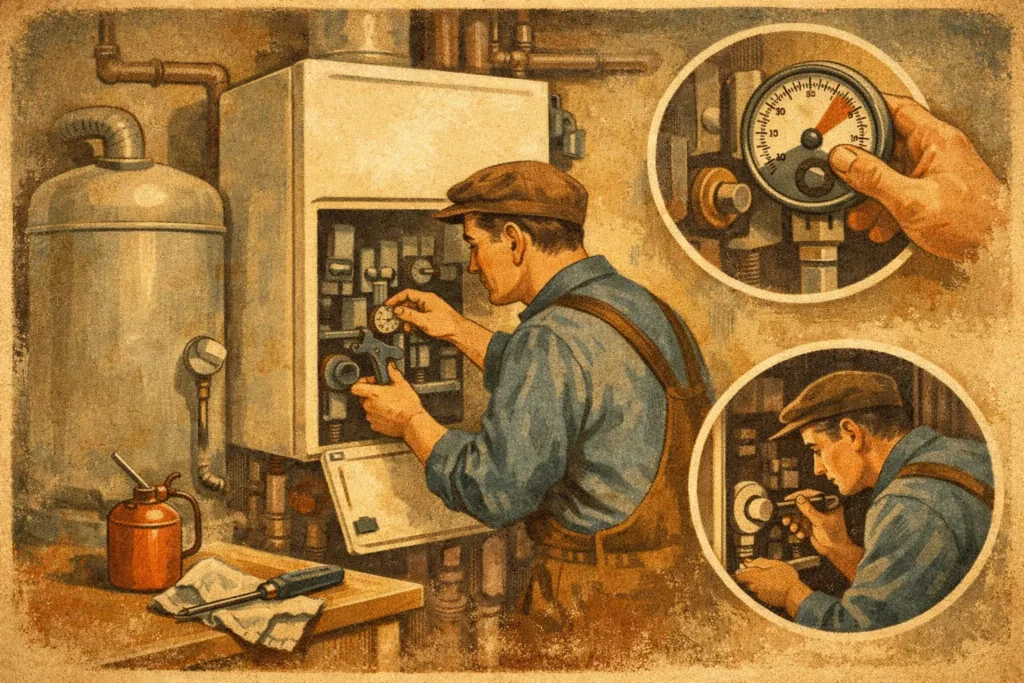
A boiler service is a safety and performance check, not simply a quick look at the controls. A Gas Safe engineer will inspect the boiler and its key components, check that it is operating safely and look for signs of wear, leaks or poor combustion.
The exact checks depend on the appliance and manufacturer guidance, but a proper service commonly involves checking the boiler’s pressure and flue, inspecting seals and connections, testing safety devices, and confirming that the boiler is burning fuel correctly. The engineer may clean accessible parts where appropriate and record any issues found.
The aim is to spot developing problems before they become a full breakdown. A service cannot guarantee that a part will never fail, particularly on an older appliance, but it can reduce the chance of avoidable trouble and give you a clearer picture of your boiler’s condition.
For many boiler manufacturers, keeping up with annual servicing is also a condition of the warranty. Keep the service record in a safe place. If you ever need to make a warranty claim, proof of regular servicing may be requested.
Servicing and repairs are not the same thing
This is the point that causes most confusion. A service checks the boiler and helps keep it running safely. Boiler cover provides support when an eligible fault or breakdown needs attention. The two work well together, but one does not automatically include everything involved in the other.
If an engineer finds a worn component during a routine service, what happens next depends on the plan terms and the nature of the fault. An eligible repair may be covered, while exclusions can apply to pre-existing faults, damage caused by poor installation, or work outside the covered system.
Likewise, a boiler service does not usually include upgrades, cosmetic work or replacing a boiler simply because it is old. Replacement support may be available under certain plans if an existing boiler cannot be repaired, but this should always be checked against the specific package conditions.
A straightforward question to ask before taking out cover is: if a fault is found at the service, is the diagnosis and repair included? The answer should be clear, with no vague wording or unexpected emergency call-out charge.
What to check before choosing boiler cover
The best plan is not always the cheapest monthly option. It is the one that covers the systems you rely on and gives you a practical response when something goes wrong.
Start with the annual service. Check whether it is included, how the appointment is arranged and whether there are circumstances where a service cannot go ahead. A boiler that is unsafe, inaccessible or beyond economic repair may need separate action.
Then look at breakdown cover. Find out whether the plan covers the boiler only, or also includes central heating controls, radiators, pipes and the hot-water system. If you want broader household protection, consider whether plumbing, drains, water leaks and electrics are included too.
You should also check the following details before you commit:
- whether there are excess fees, repair limits or emergency call-out charges;
- the response available for no heating or hot water, including out-of-hours support;
- any exclusions for known faults, sludge, accidental damage or poor maintenance;
- the boiler age, make and model accepted by the provider; and
- whether the provider uses qualified, locally available engineers.
These details are not small print to skim past. They decide how useful your cover will be on the day you need it.
Why annual servicing matters for landlords
Landlords have a different set of responsibilities from owner-occupiers. A yearly boiler service is good property maintenance, but it is not the same as a Gas Safety Check. For rented homes with gas appliances, landlords must arrange an annual Gas Safety Check and provide the relevant record to tenants within the required timescales.
A boiler service may be completed at the same visit as a Gas Safety Check where suitable arrangements are made, but they remain separate tasks. The service focuses on the condition and operation of the boiler. The safety check confirms that gas appliances, fittings and flues meet the required safety standards at the time of inspection.
For landlords managing several properties, the practical benefit of a maintenance plan is administration as much as repair support. Having boiler cover, servicing and safety-related services organised through one provider can reduce the risk of missed dates and give tenants a clear route to report an urgent issue.
It is also sensible to consider protection beyond the boiler. A tenant will not distinguish between a boiler failure, a leaking pipe or an electrical fault when they need help quickly. A broader landlord package can provide a more joined-up way to manage common property emergencies, while supporting PAT testing, gas safety and electrical safety obligations where included.
When boiler cover with servicing may not be the right fit
Boiler cover is not essential for every household. If you have a new boiler with a strong manufacturer warranty, savings set aside for repairs and a trusted engineer you can call, you may prefer to book an annual service separately.
However, warranties often do not cover every cause of a breakdown, and a one-off repair can still be costly. A monthly plan can be a better fit for people who prefer fixed costs, do not want to search for an engineer in an emergency, or own an older boiler that is still eligible for cover.
The key is to be honest about your property. If your boiler already has an intermittent fault, pressure issue or visible leak, arrange for it to be assessed rather than taking out cover and hoping the problem will be included. Most providers exclude pre-existing faults, and clear information from the start helps avoid disappointment later.
Make the service work harder for your home
Before the engineer arrives, make sure the boiler is accessible and note down anything unusual: banging noises, fluctuating pressure, cold radiators, error codes or hot water that cuts in and out. Mention these during the appointment. Small details can help the engineer investigate the right area.
After the service, keep the paperwork, follow any advice given and do not ignore a fault that returns. A quick call when the problem first appears is usually easier than waiting until you have no heating on the coldest evening of the year. The right cover should leave you feeling prepared, not tied up in terms and unexpected costs.
