
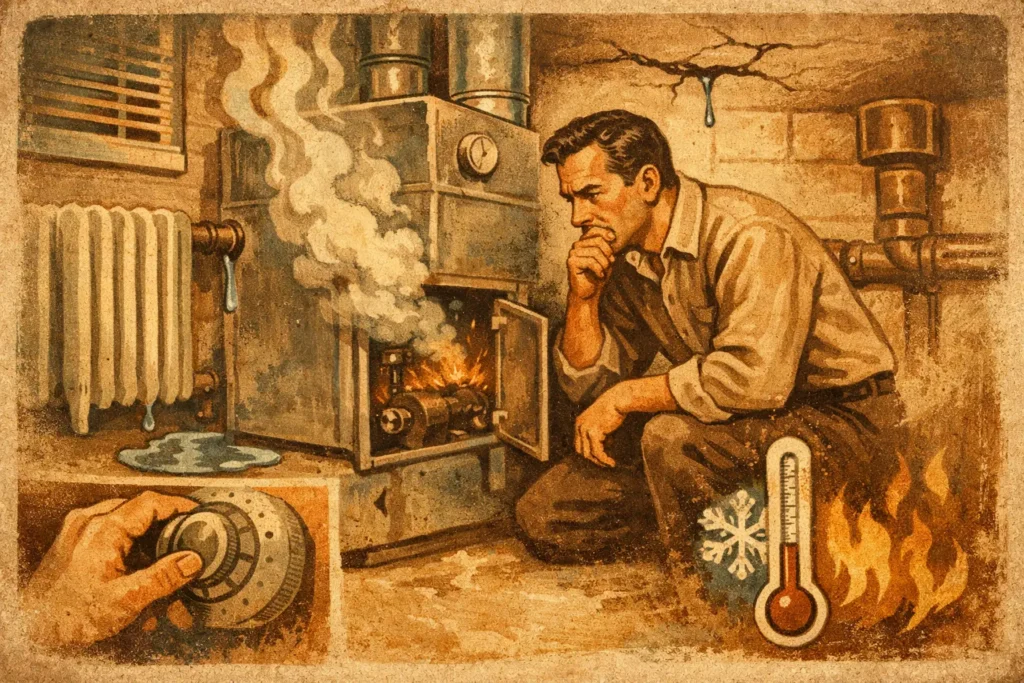
When the heating drops out on a cold West Yorkshire morning, it is rarely convenient. The best signs your heating needs repair often start small: one radiator takes ages to warm up, the boiler makes a noise it did not make before, or rooms never quite feel comfortable. Acting early can help you avoid a complete breakdown, a larger repair bill and a very cold house.
The best signs your heating needs repair
1. Your home is taking much longer to heat up
If your boiler is running but the house still feels chilly after an hour or two, your heating system may be struggling. The cause could be anything from low boiler pressure and trapped air in radiators to a faulty pump, thermostat or boiler component.
Start by checking that your thermostat is set correctly and that radiator valves are open. If the issue keeps happening, do not keep turning the temperature higher in the hope it will solve itself. A heating engineer can find the underlying fault before it leaves you with no heat at all.
2. Some radiators are cold, lukewarm or uneven
A radiator that is cold at the top may need bleeding. If it is cold at the bottom, sludge could be restricting water flow. When only certain radiators are affected, the issue might also be down to balancing, a stuck valve or a circulation problem.
Bleeding a radiator can be a straightforward job, but it is worth checking the boiler pressure afterwards. If pressure repeatedly falls or radiators keep needing attention, there may be a leak or another system fault that needs professional repair.
3. Your boiler pressure keeps dropping
Most modern boilers display their pressure on a dial or screen. If it has fallen below the recommended range, the heating may stop working properly or cut out completely. Topping it up once may be all that is needed, particularly after bleeding a radiator.
However, pressure that drops again and again is not something to ignore. It can point to a leak in the heating system, an issue with the expansion vessel or a faulty pressure relief valve. Repressurising the boiler over and over can hide the problem rather than fix it.
4. The boiler is making unfamiliar noises
Boilers and pipes are not completely silent, particularly as the heating starts up and cools down. But banging, whistling, gurgling, vibrating or loud humming are signs worth investigating.
A kettling sound, similar to a boiling kettle, can be caused by limescale or sludge affecting water flow through the heat exchanger. Gurgling may suggest trapped air, while banging pipes can be linked to pressure, loose pipework or poor circulation. The exact repair depends on the system, so a qualified engineer should diagnose the cause.
5. Your heating keeps switching itself off
A boiler that fires up, then cuts out before the house reaches temperature is known as short cycling. It wastes energy and puts extra strain on components. It may be caused by a thermostat issue, blocked system flow, low pressure or an internal boiler fault.
An occasional reset after a power cut is one thing. Repeated lockouts, error codes or a boiler that needs frequent resetting are another. Make a note of any code shown on the display, as this can help an engineer assess the fault quickly.
6. Hot water is unreliable too
For homes with a combi boiler, heating and hot water often rely on the same appliance. If the shower turns cold unexpectedly, taps take longer to get hot or the water temperature changes without warning, do not assume it is just a plumbing nuisance.
The fault may involve the boiler’s diverter valve, heat exchanger, sensors or water pressure. If both your heating and hot water are affected, arranging a repair sooner is usually the sensible option.
7. Your energy bills have risen without a clear reason
A higher bill is not always a boiler fault. Colder weather, longer time spent at home and changes to energy tariffs all make a difference. But if your usage has climbed while your routine has stayed broadly the same, an inefficient heating system could be part of the reason.
Older components, poor circulation and a boiler that is constantly cycling can all use more fuel than necessary. An annual boiler service helps spot developing problems and keeps the system working as efficiently as possible.
8. You can see water around the boiler or pipework
Water beneath a boiler, radiator or heating pipe should always be checked. Even a small, slow leak can damage flooring, walls and cupboards over time, while also causing boiler pressure to fall.
Do not remove the boiler casing or attempt to repair internal parts yourself. Dry the visible area if it is safe to do so, protect nearby belongings and arrange for an engineer to inspect it. A leak around a radiator valve may be minor, but it still needs attention before it gets worse.
9. Your thermostat is not responding properly
Sometimes the boiler is fine and the controls are the problem. If you turn the thermostat up but the heating does not start, or the system stays on after it should have stopped, the thermostat, timer or wiring may be at fault.
Try replacing batteries in a wireless thermostat and check the timer settings first. If the problem continues, an engineer can test the controls safely. A faulty thermostat can make a perfectly good boiler seem unreliable and can lead to wasted heating costs.
10. You notice warning signs linked to gas or carbon monoxide
A yellow or orange flame on a gas appliance, black marks or staining around the boiler, or frequent pilot light problems need urgent professional attention. A healthy gas flame should normally be crisp and blue.
If you smell gas, do not use electrical switches, naked flames or appliances. Open doors and windows if safe, leave the property and call the National Gas Emergency Service on 0800 111 999. If a carbon monoxide alarm sounds, get everyone outside into fresh air and seek urgent advice. Carbon monoxide has no smell or colour, which is why a working alarm is essential.
What to do before booking a heating repair
There are a few safe checks that can save time. Check whether your boiler has an error code, whether the pressure is within the manufacturer’s recommended range, and whether your thermostat has power and is set to heat. You can also check that your energy supply is working and that the condensate pipe has not frozen during very cold weather.
Avoid taking the boiler cover off or trying to repair gas-related components yourself. Boiler repairs should always be carried out by a Gas Safe registered engineer. Keeping a note of when the issue began, what happens when you turn the heating on and any error code displayed will make the visit more efficient.
Repairs, servicing and replacement: what is the right call?
Not every fault means you need a new boiler. A worn valve, faulty sensor, failing fan or pressure problem can often be repaired. The right choice depends on the boiler’s age, repair history, condition and the cost of parts compared with a replacement.
Regular servicing is the best way to reduce surprise breakdowns, but it cannot prevent every fault. Homeowners who want clearer monthly costs can benefit from cover that includes annual servicing and repair support, rather than facing an unexpected bill when the heating fails. No Hassle Heating provides practical cover options for homeowners and landlords across West Yorkshire, including 24/7 emergency call-outs with no additional emergency call-out charge under the relevant plan.
A quick note for landlords
A tenant reporting cold radiators or no hot water needs a prompt response, especially during colder months. Keep records of reported faults, repairs and annual servicing, and ensure gas appliances are checked by a Gas Safe registered engineer as required. Fast action protects your property, helps keep tenants safe and avoids a small heating issue becoming a longer, more expensive dispute.
A heating system rarely chooses a convenient time to fail. If something feels different, sounds wrong or is costing more to run, trust the warning sign and arrange help before comfort turns into a complete breakdown.
