
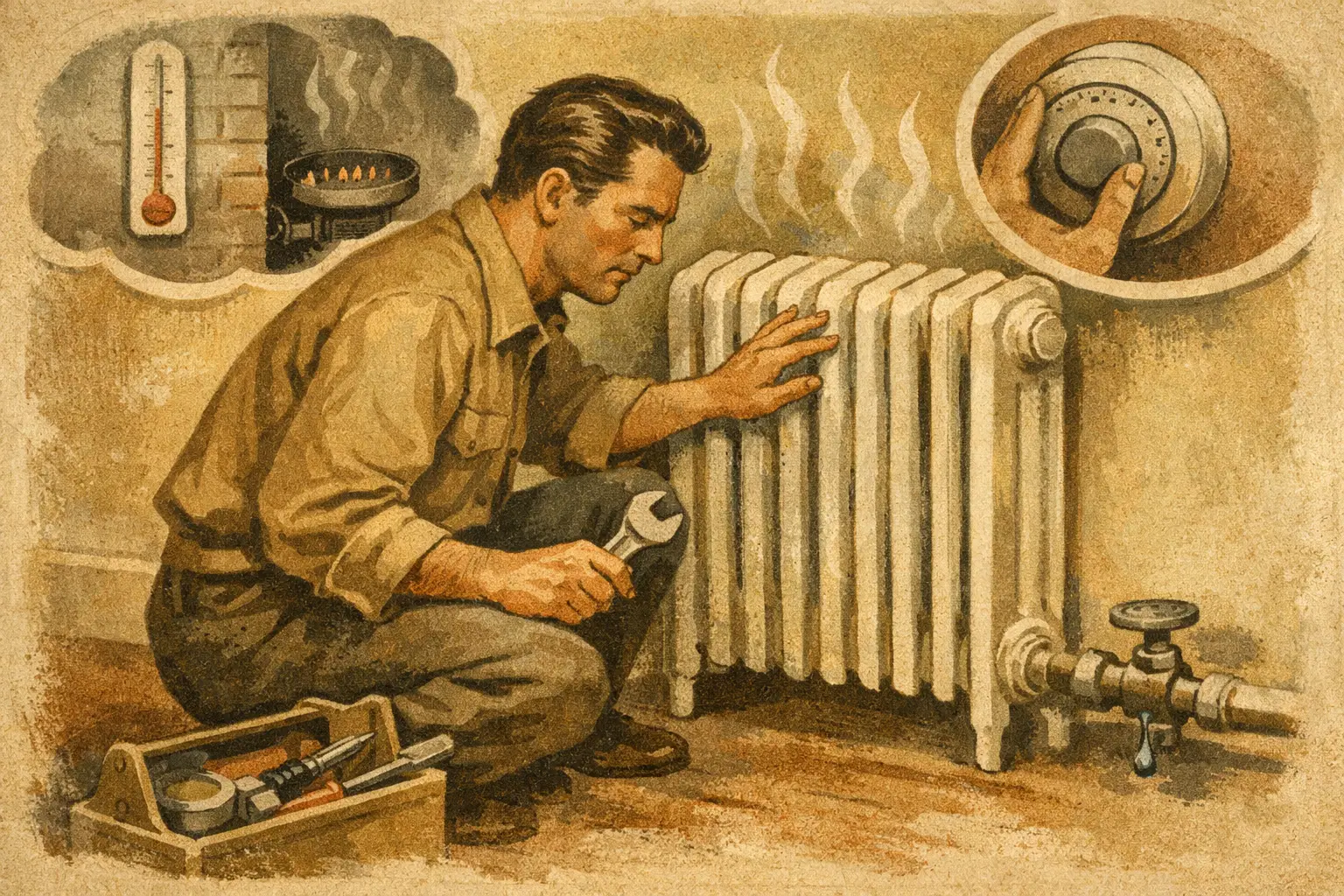
A radiator that stays cold while the heating is on is more than an annoyance, particularly when the weather turns in West Yorkshire. The good news is that many cold radiator causes are straightforward to identify. A quick check can often tell you whether it is a setting, trapped air or something that needs a qualified heating engineer.
Before touching any valves, let the system cool down if it has been running. Hot radiators and pipework can cause burns. If you smell gas, notice a leak around the boiler, or see water coming from a radiator valve, turn the heating off where safe to do so and arrange professional help.
Start by working out which radiators are cold
The pattern matters. One cold radiator usually points to a local issue with that radiator or its valves. Several cold radiators can indicate a wider problem with the heating system, boiler pressure or controls.
Feel the radiator carefully from top to bottom and compare it with other radiators in the property. A radiator that is cold at the top behaves differently from one that is cold at the bottom. A radiator that is cold all over requires a different set of checks again.
Also check whether the heating is actually being called for. Set the thermostat a few degrees above the current room temperature, make sure the programmer is set to heating on, and allow the system time to respond. If every radiator is cool, the issue may not be the radiators at all.
Common cold radiator causes in the home
Trapped air in the radiator
If the top of a radiator is cold but the bottom is warm, trapped air is the likely cause. Air rises within the radiator and stops hot water reaching the upper section properly. You may also hear gurgling or bubbling noises when the heating comes on.
Bleeding the radiator can release this air. With the heating off and the radiator cool, use a radiator key to slowly open the bleed valve at the top. Hold a cloth underneath, as a small amount of water may escape. Close the valve as soon as water flows steadily rather than air hissing out.
After bleeding one or more radiators, check the boiler pressure. On many sealed systems, bleeding releases enough water to lower the pressure. Your boiler manual will show the correct range, but it is commonly around 1 to 1.5 bar when the system is cold. Do not keep topping up a system that regularly loses pressure – that can be a sign of a leak or another fault.
A thermostatic radiator valve is stuck or turned down
The thermostatic radiator valve, often called a TRV, is the numbered control on one side of most radiators. It controls the flow of hot water according to the temperature in the room. It may simply be set too low, especially in a spare room, hallway or rental property between tenancies.
Turn the TRV up and wait for the system to heat. If the radiator remains cold while others are warm, the internal pin may be stuck in the closed position. This often happens after the heating has been off through summer.
You can remove the TRV head on some models to inspect the small metal pin beneath it. The pin should move gently up and down. Do not pull it out, force it or dismantle the valve. A seized valve can be repaired or replaced by a heating engineer without turning a small issue into a leak.
The lockshield valve is closed
On the other side of the radiator is usually a plain-capped valve called the lockshield. It helps balance the system by controlling the water flow through each radiator. If it has been closed during decorating, repair work or a previous leak, the radiator may not heat up.
It is sensible to check that it has not been fully shut, but take note of its original position before adjusting it. Randomly opening every lockshield valve can upset the balance of the system, leaving nearby radiators very hot and those further away lukewarm.
Sludge and debris at the bottom of the radiator
When a radiator is warm at the top but cold at the bottom, sludge is a common culprit. Over time, corrosion within a central heating system can create dark deposits that settle in radiators. These deposits restrict the flow of hot water and reduce the radiator’s output.
Bleeding will not solve a sludge problem because the issue is not air. Depending on the condition of the system, an engineer may recommend removing and flushing the radiator, cleaning the system, or fitting inhibitor to protect against future corrosion. The right approach depends on the age of the system and whether more than one radiator is affected.
The heating system needs balancing
If radiators closest to the boiler heat quickly but rooms further away stay cool, the system may be out of balance. Hot water naturally takes the easiest route, so some radiators can receive more flow than others.
Balancing involves carefully adjusting lockshield valves to share the available heat around the property. It takes patience and temperature checks, so it is often best left to an engineer, especially in a larger home or a landlord-owned property where consistent heating matters in every room.
Low boiler pressure or a boiler fault
Low pressure can stop a sealed heating system from circulating water properly. Check the pressure gauge or display on the boiler before assuming the radiator itself is at fault. If the pressure is below the recommended range, follow the boiler manufacturer’s instructions or ask an engineer for help.
A boiler fault, failed pump, frozen condensate pipe in very cold weather, or a problem with the motorised valve can also leave radiators cold. Warning codes, unusual banging sounds, frequent pressure loss and a boiler that keeps switching off are all signs to stop troubleshooting and arrange a qualified repair.
A safe order for checking a cold radiator
Start with the easy checks: confirm the heating controls are on, turn the TRV up, and make sure the radiator valves have not been closed. Then look at the heating pattern. Cold at the top suggests air, while cold at the bottom suggests sludge.
If you bleed a radiator, check boiler pressure afterwards. If the pressure repeatedly drops, if water leaks from a valve, or if the radiator still will not heat after these basic checks, do not keep experimenting. Repeated adjustments can hide the real issue or create a more expensive repair.
For landlords, it is worth asking tenants to report cold radiators early. A single cold room can affect comfort, create condensation concerns and lead to avoidable complaints. Keep a record of reported faults and arrange a prompt inspection rather than asking a tenant to take apart valves or repressurise an unfamiliar boiler.
When to call a heating engineer
Call for professional help if several radiators are cold, the boiler shows an error code, the system has low pressure that returns again, or you cannot identify why one radiator has stopped heating. You should also call an engineer if you have a conventional system and are unsure how to check the feed and expansion tank, as these systems work differently from sealed combi and system boilers.
A qualified engineer can diagnose circulation problems, replace faulty valves, clean sludge from the system and check that the boiler is operating safely. For homeowners and landlords who prefer predictable costs, a maintenance plan can also take the worry out of unexpected heating faults. No Hassle Heating offers local cover designed to provide practical support without extra emergency call-out charges under the relevant plan.
A cold radiator does not always mean a major breakdown, but it should not be ignored for weeks. Acting while the rest of the system is still working gives you the best chance of a simple fix and a comfortably warm home when you need it most.