
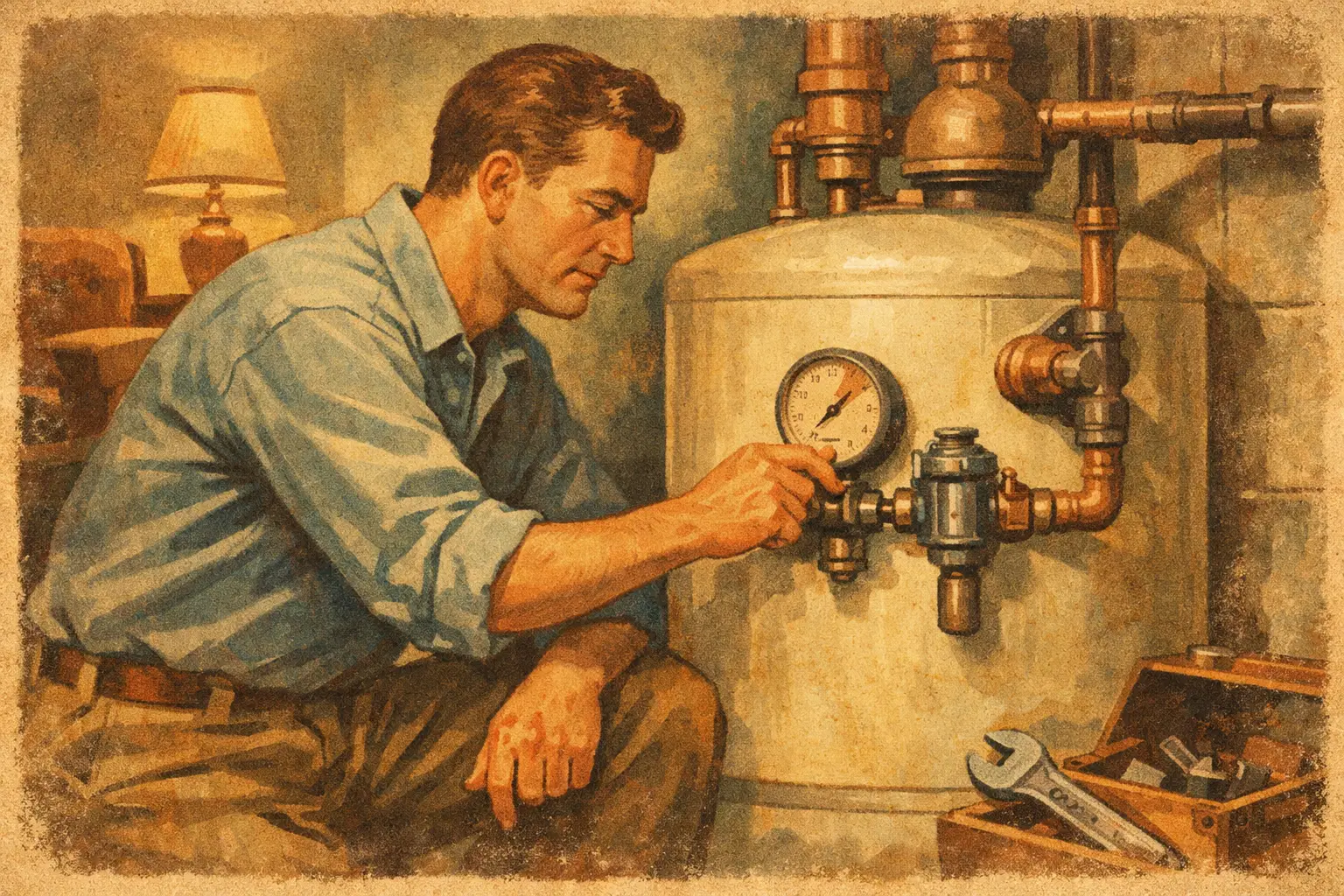
A boiler showing low pressure can stop your heating and hot water when you need them most. The good news is that, in many homes, learning how to reset boiler pressure is a simple task that takes a few minutes. The key is to do it slowly, use the correct filling controls and know when a pressure issue needs an engineer rather than another top-up.
Most modern sealed heating systems work best at around 1 to 1.5 bar when cold. Your boiler’s pressure gauge may be a round dial or a number on the display. If it has dropped below 1 bar, the boiler may show a fault code, lock out or simply refuse to fire up.
First, check whether your boiler needs repressurising
Before adding water, look at the pressure reading with the heating switched off and the system cool. A small drop over a long period is not unusual, particularly after radiators have been bled. However, a gauge sitting below 1 bar usually needs attention.
Do not confuse boiler pressure with a boiler reset. A reset clears certain fault codes, usually by pressing the reset button or following the instructions on the display. Repressurising adds water to the sealed heating system. If your boiler says low pressure, resetting it without restoring the pressure will rarely solve the problem.
Your boiler manual is the best guide for its specific controls and pressure range. If you cannot find it, check the model name and look for instructions printed on or near the boiler. Never remove the boiler casing to look for valves or controls. Anything behind that casing should be left to a Gas Safe registered engineer.
How to reset boiler pressure using a filling loop
Many boilers have an external filling loop: a short, flexible silver hose underneath the boiler, with a valve at each end. Others have a built-in filling key, lever or pair of taps. The principle is the same: you briefly let mains water into the heating system until the gauge reaches the correct level.
Make sure the boiler is off and cool before you begin. Put an old towel beneath the boiler in case a small amount of water escapes from the controls.
External braided filling loop
If you have a removable braided hose, it may already be connected or stored separately nearby. First check that the rubber washers are present in the hose fittings. Attach it securely to both filling points by hand, taking care not to cross-thread the connectors.
Open one valve slowly, then the other. You should hear water entering the system and see the pressure gauge begin to rise. Watch the gauge throughout. Once it reaches around 1 to 1.5 bar, close both valves firmly. Do not keep filling until the needle reaches the red section.
If the loop is designed to be removed, take it off once the valves are closed and keep it somewhere safe. A small amount of water may drip as you remove it, which is where the towel helps.
Built-in filling key, tap or lever
Some boilers have a built-in filling arrangement instead of a separate hose. There may be a small key that locks into place, a blue or black lever, or two taps beneath the boiler. Follow the instructions for your particular model, then add water gradually while watching the display or pressure gauge.
Stop at the recommended cold pressure and return the key, lever or taps to the closed position. A filling mechanism left open can over-pressurise the system, so always double-check it is shut.
What pressure should your boiler be?
For many domestic boilers, 1 to 1.5 bar when the system is cold is a sensible target. When the heating is running and water expands, the reading can rise, often to around 2 bar. That is normally fine.
Exact figures vary by boiler and system, so do not rely on a single number if your manufacturer’s instructions say otherwise. Properties with larger heating systems, several storeys or unusual pipework may have a different recommended pressure.
Pressure above 2.5 bar, or approaching the red zone, needs attention. Switch the heating off and allow it to cool, then check whether a filling valve has been left open. Do not repeatedly release water from a radiator or pipework if you are unsure what is causing the rise. Over-pressure can indicate an issue with the expansion vessel, filling arrangement or another component that needs professional diagnosis.
After you repressurise the boiler
Once the gauge is back in range, turn the boiler on and run the heating for a short time. Check that the fault code has cleared and that radiators begin to warm up. Some boilers may still need a separate reset after the pressure has been restored.
Keep an eye on the gauge over the next few days. If it stays steady, the low pressure may have been linked to normal maintenance, such as bleeding radiators. If it falls again quickly, adding more water is only treating the symptom.
A recurring pressure drop may be caused by a small leak in a radiator valve, pipe joint or the boiler itself. Look for damp patches, staining around radiator valves, water beneath the boiler or a discharge pipe dripping outside. Not every leak is visible, particularly where pipework runs under floors, so a system that repeatedly loses pressure should be inspected.
When not to top up the pressure yourself
There are times when it is safer to stop and call for help. Arrange an engineer visit if you can smell gas, see water leaking from the boiler, find the pressure repeatedly drops, or cannot identify the correct filling controls. If the pressure shoots up soon after topping up, that also needs checking.
You should also avoid forcing stiff valves, using tools on delicate plastic controls or guessing which pipe is which. The controls beneath a boiler can be cramped, and turning the wrong valve may create a bigger problem.
If you smell gas, do not operate electrical switches or attempt to relight the boiler. Turn off the gas supply only if it is safe to do so, open doors and windows, leave the property, and contact the National Gas Emergency Service on 0800 111 999.
A practical note for tenants and landlords
Tenants can usually check the pressure gauge and, where they have clear instructions, top up a boiler safely. They should report frequent pressure loss, leaks and fault codes to the landlord or managing agent rather than repeatedly repressurising the system.
For landlords, a boiler that keeps losing pressure is worth investigating promptly. Aside from the risk of a heating breakdown, an unresolved leak can cause damage and lead to avoidable tenant disruption. Keeping a record of reported faults and repairs also makes maintenance easier to manage across a property portfolio.
Annual servicing helps identify issues before they turn into a no-heating call-out. It does not remove the need for a valid Gas Safety Check in rented homes, but it gives an engineer the chance to assess the boiler’s general condition, pressure behaviour and any visible signs of wear.
Simple habits that help avoid pressure problems
Bleeding radiators can lower system pressure because a small amount of water is lost in the process. Check the gauge afterwards and top up only if required. Avoid bleeding radiators while the heating is hot, as hot water can cause injury and a warm system gives a less useful pressure reading.
It is also worth looking at the gauge occasionally, rather than waiting for a boiler fault on a cold morning. A steady pressure reading is reassuring. A slow, unexplained decline gives you time to arrange a repair before heating or hot water is interrupted.
For homeowners and landlords across West Yorkshire, No Hassle Heating provides straightforward cover designed to take the stress out of unexpected boiler and heating faults, with qualified help available when a simple pressure top-up is not the answer.
A pressure gauge is a small detail, but it can give early warning that your heating system needs attention. Restore pressure carefully when it is low, and treat repeated changes as a reason to get the right engineer involved before a minor issue becomes a bigger disruption.