
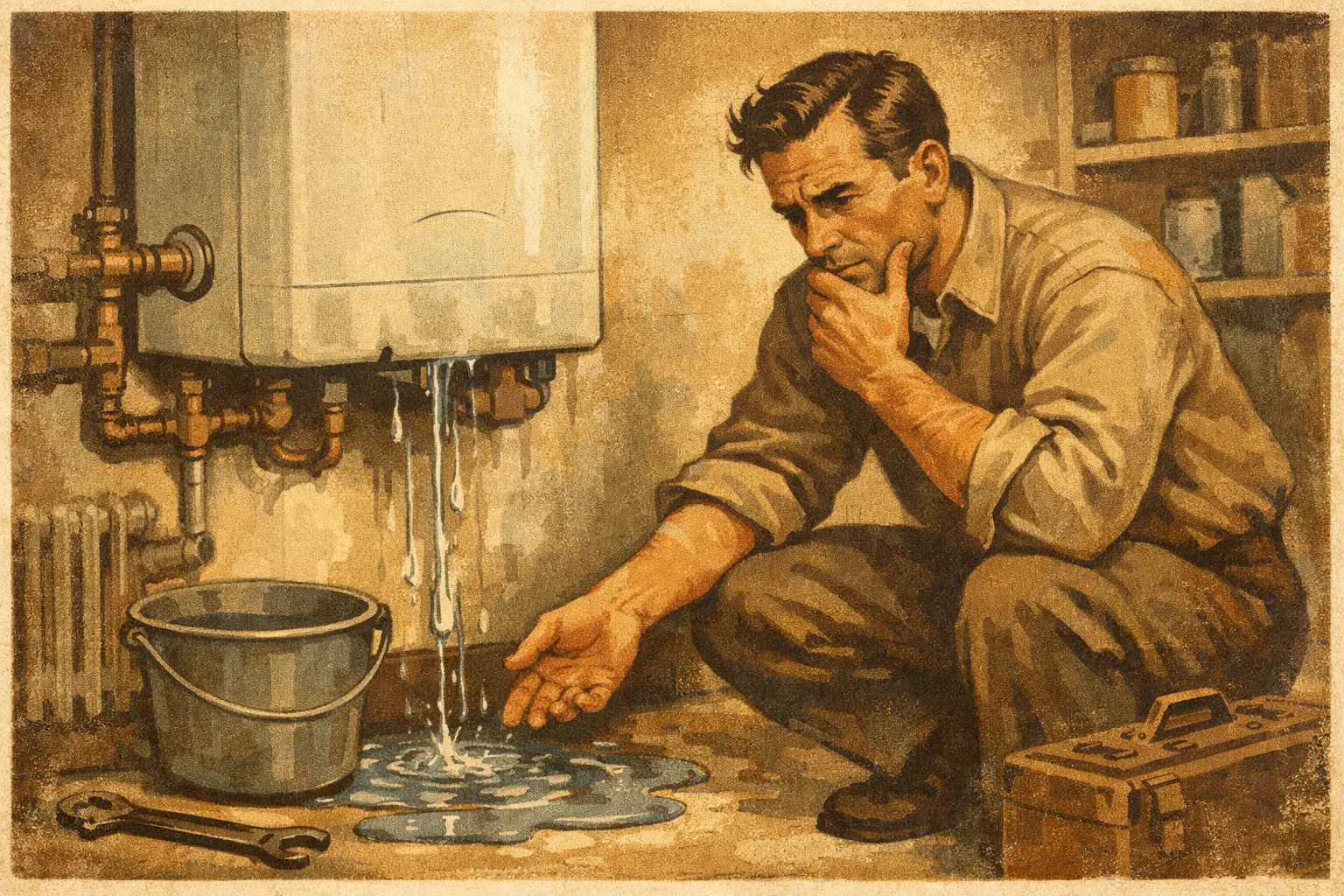
A boiler leaking water can quickly turn from a small drip into a damaged cupboard, stained ceiling or loss of heating and hot water. The good news is that you do not need to diagnose the fault yourself. A few safe first steps can limit the damage while a qualified engineer identifies the cause.
Whether you own your home or manage a rental property in West Yorkshire, treat water around a boiler seriously. Boilers combine water, gas and electrics, so a leak is not a job for a quick DIY repair.
What to do when your boiler is leaking water
Start by protecting people and the property. If water is close to electrical sockets, switches or the boiler’s power supply, do not touch electrical equipment and avoid standing in water. If it is safe to do so, switch the boiler off at its electrical isolation switch. Do not remove the boiler casing or try to tighten internal parts.
Place towels, a washing-up bowl or a bucket beneath the drip to catch water. Move stored items, paperwork and anything electrical away from the area. If water is running down a wall or through a ceiling, contain what you can, but keep clear of light fittings and call for help promptly.
Next, look at the boiler pressure gauge without taking the cover off. Most sealed heating systems work at around 1 to 1.5 bar when cold, although the manufacturer’s instructions take priority. A pressure reading that is climbing towards 3 bar, or has reached it, is useful information for the engineer. Do not keep repressurising the boiler to compensate for a leak.
If you can safely identify the boiler’s cold-water isolation valve and know how it operates, turning it off may help slow an active leak. If you are unsure, leave it alone. Shutting off the wrong valve can create another problem or leave tenants without water unnecessarily.
When to make an emergency call
Arrange urgent professional help if the leak is heavy, water is near electrics, the boiler has stopped working, or the pressure is repeatedly rising. You should also act straight away if you smell gas, notice a hissing sound, or feel unwell with symptoms such as dizziness or nausea. In a suspected gas emergency, turn off the gas supply only if it is safe and you know where the emergency control valve is, open doors and windows, avoid flames and electrical switches, leave the property, then contact the appropriate emergency service.
For a water leak without signs of gas, a qualified Gas Safe engineer can assess the boiler and make the repair. A 24/7 emergency call-out service is especially valuable when a leak starts outside normal working hours or in a tenanted property.
Why is my boiler leaking water?
The location of the water gives an engineer a useful starting point, but it does not always reveal the exact fault. Water can travel along pipes or collect beneath the boiler before dripping, so the visible source may not be the real one.
A leak from underneath the boiler can be caused by a worn seal, loose connection, corroded pipework, a faulty pump or an issue with an internal component. These repairs vary greatly in cost and complexity. Some involve replacing a small part; others can indicate that an older boiler is becoming unreliable.
Water coming from the pressure relief pipe outside often points to high system pressure. This copper pipe normally exits through an external wall and may drip when the boiler is running or after it has heated up. The pressure relief valve may have opened because pressure is too high, but the underlying cause could be a failing expansion vessel, a faulty filling loop or a valve that is no longer sealing properly.
A boiler leaking from its bottom may also be linked to the condensate pipe. Modern condensing boilers produce acidic wastewater called condensate. If the pipe is cracked, blocked or frozen in very cold weather, water may appear around the boiler. A frozen external condensate pipe can sometimes be thawed carefully with warm, not boiling, water, but only when it is clearly accessible and safe to reach. If there is any doubt about the source, call an engineer.
Corrosion is another common cause, particularly on older systems. Tiny pinhole leaks can develop in pipework, radiators, joints or the heat exchanger over time. Central-heating water that has not been treated properly can contribute to internal corrosion. Repeatedly topping up pressure introduces fresh water and oxygen into the system, which can make the issue worse rather than solve it.
Do not confuse a boiler leak with normal condensation
Not every patch of moisture means your boiler has failed. During cold weather, condensation can form on nearby pipes or on an external flue. A small amount of water from a condensate pipe is also normal when the boiler is operating.
The difference is consistency and location. Normal condensate should be directed through the condensate waste pipe, not pooling beneath the boiler or escaping from its casing. Drips from valves, pipe joints or the boiler itself need checking. Take a clear photo or short video of the leak if you can do so safely. It can help an engineer understand whether the problem happens only when heating or hot water is on.
Why you should not keep using a leaking boiler
It can be tempting to carry on using the heating if the drip seems minor, particularly in winter. That is a risk not worth taking. Water can damage internal electrical components, worsen corrosion and cause a small seal failure to become a larger fault. If pressure is unstable, the boiler may also lock out, leaving you with no heating or hot water at the worst possible time.
For landlords, a leaking boiler needs a prompt response even if a tenant still has heating. Water damage can affect the property as well as the appliance, and delays can create unnecessary disruption. Keep a record of the report, the action taken and the repair outcome. It is a sensible part of maintaining a safe, well-managed home.
What an engineer will check
A Gas Safe engineer will inspect the boiler safely and trace the cause rather than simply treating the visible drip. They may check the pressure relief valve, expansion vessel, pump, heat exchanger, seals, filling loop and connections beneath the boiler. They will also inspect the condensate route and look for signs of corrosion or damage in the wider heating system.
The right repair depends on the fault, the boiler’s age and the condition of the system overall. A replacement valve or seal can be a straightforward repair. A leaking heat exchanger in an older boiler may make replacement the more sensible long-term option. An experienced engineer should explain the findings in plain English, set out the available options and let you know what is needed to restore safe operation.
Reducing the chance of another leak
Annual boiler servicing is one of the best ways to spot worn parts, poor pressure control and early corrosion before they lead to water damage. A service cannot prevent every unexpected failure, but it gives an engineer the chance to check that the boiler is operating safely and efficiently.
Pay attention to changes between services. Pressure that regularly drops, radiators needing frequent bleeding, banging noises, discoloured water beneath pipe joints or an intermittent loss of hot water are all worth reporting early. Avoid using leak-sealing products or additives unless they have been recommended by a heating professional for your particular system.
For homeowners, a maintenance plan can make an unexpected fault easier to manage by spreading costs and providing a clear route to help. For landlords, cover that combines boiler support with plumbing and safety checks can reduce the admin involved in keeping a property running properly. No Hassle Heating offers local, round-the-clock support designed to remove the uncertainty from breakdowns and urgent repairs.
A small drip deserves a proper fix
Do not wait for a boiler leak to become a ceiling repair or a full heating breakdown. Switch the boiler off if it is safe, contain the water, keep clear of electrics and arrange a qualified inspection. Acting early protects your home, your tenants and your peace of mind.