
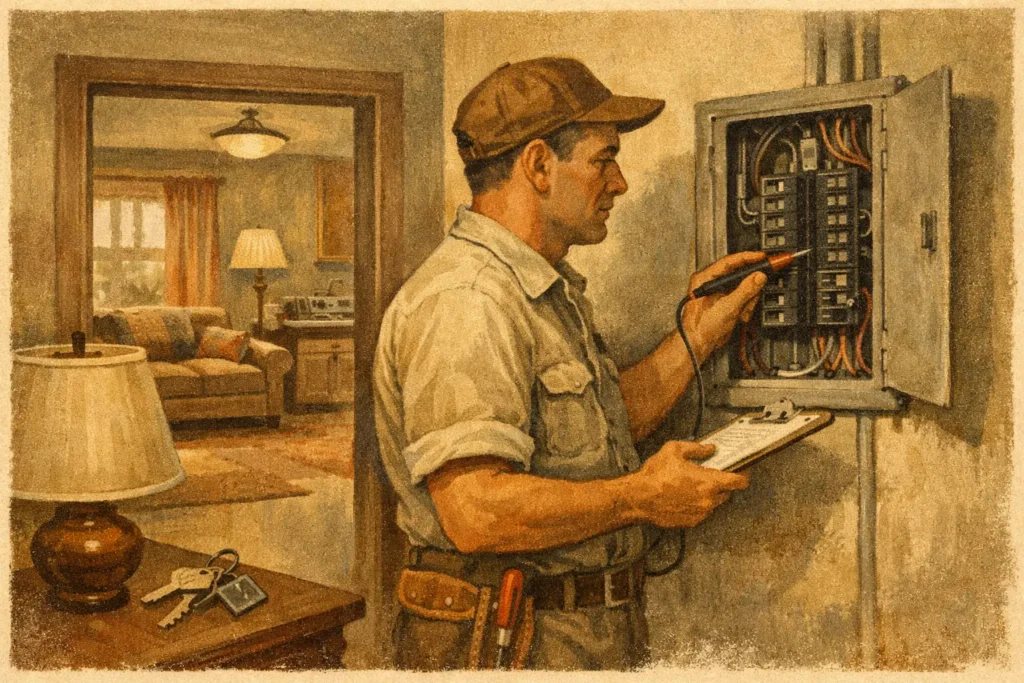
A loose socket, ageing consumer unit or damaged cable can quickly become more than an inconvenient maintenance job. For landlords, electrical safety is a legal responsibility as well as a vital part of protecting tenants and the property. This landlord electrical inspection guide explains what needs checking, when an Electrical Installation Condition Report is due, and how to keep the process simple.
What a landlord electrical inspection covers
An electrical inspection looks at the fixed electrical installation in a rental property. That means the wiring hidden in walls and ceilings, consumer unit or fuse box, plug sockets, light fittings, switches, extractor fans and any permanently connected electrical equipment.
A qualified and competent electrician carries out a series of visual checks and electrical tests. They are looking for signs of deterioration, overloading, damage, poor previous work or anything that could cause electric shock or fire. The outcome is recorded in an Electrical Installation Condition Report, usually called an EICR.
An EICR is not the same as a quick visual visit. It tests the condition of the installation and confirms whether it is safe for continued use. It also does not replace a Gas Safety Check, boiler service or routine property inspection. Each one covers a different risk, so keeping them organised is the practical approach.
The rules for landlords in England
For most private rented homes in England, landlords must have the electrical installation inspected and tested at least every five years. The work must be completed by a qualified person, and the landlord must provide a copy of the report to existing tenants within 28 days of the inspection.
For a new tenant, the latest report should be provided before they move in. If the local authority asks for a copy, it must normally be supplied within seven days. Keep the report until the next inspection is due, as it provides a clear record that the property has been checked.
These rules apply to fixed installations in privately rented properties. Some exemptions and different requirements can apply in specific situations, so landlords with holiday lets, resident landlords, social housing or unusual tenancy arrangements should check the rules that apply to their property. Houses in Multiple Occupation may also have additional licensing conditions set by the local council.
The five-year interval is a maximum, not a reason to ignore warning signs in between. If a tenant reports burning smells, repeated tripping, sparking, cracked sockets or shocks from an appliance, arrange an electrician promptly. A fault does not wait for the next certificate date.
Understanding EICR codes
The report may record observations using classification codes. A C1 means danger is present and urgent action is needed. A C2 identifies a potentially dangerous issue that requires remedial work. FI means further investigation is needed before safety can be confirmed.
A C3 is an improvement recommendation. It does not usually mean the installation has failed, but it may still be worth addressing, particularly in an older property. Your electrician should explain the findings in plain English and identify what needs doing first.
Where the report identifies C1, C2 or FI observations, landlords must arrange remedial work or further investigation within 28 days, or sooner if the report specifies a shorter timescale. Once work is complete, obtain written confirmation from the electrician and give it to tenants and, if requested, the local authority.
Preparing for an electrical inspection
Good preparation avoids missed appointments and makes the inspection more useful. Let tenants know the date, expected arrival time and that the electrician may need access to every room, the consumer unit, sockets and fixed equipment. Give proper notice before entering the property, unless there is an emergency.
Clear access matters. The consumer unit should not be blocked by cupboards, furniture or stored belongings. Ask tenants not to unplug essential medical equipment without discussing it first. Power may need to be switched off briefly during testing, so it is sensible to plan around home working, cooking and children’s routines where possible.
Before the visit, gather earlier EICRs, certificates for recent electrical work and details of any recurring electrical issues. These records can help the electrician understand the installation and avoid repeating work unnecessarily.
A straightforward landlord compliance file should include:
- the current EICR and any previous reports
- confirmation that remedial work or investigations have been completed
- dates when reports were issued to tenants
- certificates for electrical alterations, such as a replacement consumer unit
- a log of tenant-reported faults and the action taken
This does not need to be complicated. A clearly labelled digital folder for each property can save time when a tenancy changes, an inspection is due or the council requests paperwork.
PAT testing: useful, but different from an EICR
Portable Appliance Testing, or PAT testing, relates to movable electrical items rather than the fixed installation. Examples include a landlord-supplied microwave, kettle, television, vacuum cleaner or freestanding lamp.
PAT testing is not a blanket legal requirement for every rented property in England. However, landlords still have a duty to ensure supplied electrical equipment is safe. In practice, PAT testing is a sensible way to support that duty, especially in furnished lets, shared houses and properties with regular tenant turnover. Some HMO licence conditions may specifically require it.
Do not overlook simple checks between formal tests. Damaged plugs, loose leads, exposed wiring and cracked casings should be dealt with straight away. Tenants should also know to report faults rather than attempting repairs themselves.
The key distinction is simple: an EICR checks the property’s fixed wiring and electrical installation, while PAT testing checks portable appliances supplied with the tenancy. One does not replace the other.
Common issues found in rental properties
Older homes can have perfectly serviceable electrics, but age often brings a higher chance of wear, outdated components or alterations carried out over many years. Consumer units without modern protective devices, deteriorated wiring, overloaded extension leads and unsuitable fittings in bathrooms are common concerns.
DIY work is another risk. An extra socket or light fitting may look tidy on the surface while connections behind it are unsafe. This is why certificates for notifiable electrical work and a proper inspection history are worth keeping.
Properties with frequent tenant changes need particular attention. More occupants can mean more appliances, more extension leads and more strain on circuits. That does not automatically mean a property is unsafe, but it does make clear communication and timely maintenance more valuable.
A simple schedule that keeps you on track
The easiest way to stay compliant is to treat electrical safety as part of an ongoing property maintenance plan rather than a task to chase every five years. Set a reminder several months before the EICR expires, allowing time to arrange access and complete any work found during the inspection.
At each tenancy change, check that the incoming tenant receives the current EICR. If the property is furnished, inspect supplied appliances and arrange PAT testing where appropriate. During routine property visits, look for obvious damage to sockets, switches and light fittings, and ask tenants whether circuits are tripping or appliances are causing concern.
For landlords with more than one property, dates can soon become difficult to manage alongside boiler servicing, Gas Safety Checks, repairs and tenant enquiries. Bringing these jobs into one clear schedule reduces the risk of an expired certificate or a last-minute call-out.
No Hassle Heating supports landlords across West Yorkshire with practical cover that can include Electrical Safety Checks, PAT testing, Gas Safety Checks and help when heating, plumbing or electrical problems arise. A fixed monthly plan can make it easier to budget for the essentials while keeping key safety jobs in one place.
Choosing the right electrician
Price matters, but the cheapest inspection is not always the best value if the report is vague, access is rushed or remedial work is not clearly explained. Choose an electrician who is qualified to inspect and test, provides a proper EICR, explains any observations clearly and can issue written confirmation once required work is complete.
Ask what is included before booking. Larger homes, older properties, outbuildings, communal areas and complicated access arrangements can affect the time needed. A clear quote and clear scope help prevent surprises.
Most importantly, act early when a report highlights a concern. Electrical compliance is not paperwork for its own sake. It is one of the practical steps that helps tenants feel safe at home and helps landlords protect the property they have worked hard to build.
