
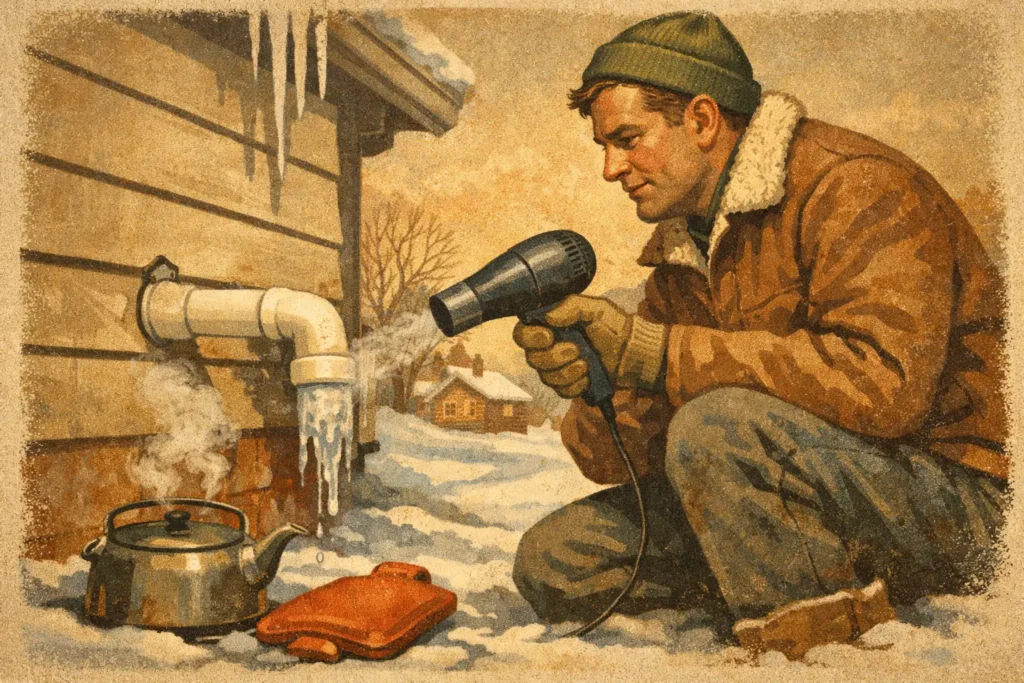
A boiler that suddenly stops working during a cold West Yorkshire morning is often not a major breakdown. If you are wondering how to thaw condensate pipe safely, a frozen external pipe may be the cause. It is a common winter problem, and in many cases you can deal with it at home without taking risks or dismantling anything.
Your boiler creates condensate – a mildly acidic liquid produced as it recovers heat from its flue gases. This water normally runs through a small plastic waste pipe into a drain. When temperatures drop below freezing, the section outside your home can freeze, stopping the condensate from draining away. Most modern condensing boilers then switch off as a safety measure.
Signs your condensate pipe has frozen
The most obvious sign is a boiler that has stopped providing heating or hot water during freezing weather. You may see a fault code, warning light or message on the boiler display. The exact code depends on the make and model, so check the instructions supplied with your boiler if you still have them.
Outside, look for a narrow white, grey or black plastic pipe running from the boiler area to an external drain, waste pipe or gully. It is usually around the width of a large coin. Frost on the pipe, visible ice around its outlet or a cold spell followed by a boiler lockout are all useful clues.
Do not assume every winter boiler fault is a frozen condensate pipe. A loss of gas supply, low system pressure, an electrical fault or a separate boiler issue can cause similar symptoms. If you cannot identify the pipe safely, or you are unsure what the boiler is telling you, stop there and arrange help.
How to thaw a condensate pipe safely
Start by switching the boiler off at its controls. You do not normally need to isolate the electricity supply at the wall, but avoid touching any wiring, opening the boiler casing or attempting to remove internal parts.
Find the frozen section of pipe. It is most often at an exposed bend, at the lowest point of the run or where the pipe enters the drain. Take care on icy paths and avoid working from a ladder or reaching over a wall.
Fill a hot-water bottle or heatproof container with warm water, not boiling water. Hold it against the frozen part of the pipe, beginning at the end closest to the drain where possible. Alternatively, pour warm water slowly over the pipe, using a jug. Repeat this gradually until the ice has melted and water can flow freely.
A warm, damp cloth wrapped around the pipe can also help. The aim is to bring the pipe temperature up gently. Rushing the job can crack plastic pipework, especially if it is already brittle from age and repeated cold weather.
Once the blockage has cleared, switch the boiler back on and follow the manufacturer’s reset instructions if it has locked out. Many boilers have a reset button, but the method differs by model. Give the boiler a few minutes to restart. If heating and hot water return, keep an eye on it for the rest of the day to make sure the condensate is draining properly.
What not to use
Never pour boiling water onto a frozen condensate pipe. The sudden temperature change can damage the pipe or nearby fittings. Do not use a naked flame, blowtorch, heat gun or space heater, and do not strike the pipe to break the ice. These methods can cause injury, fire damage or a leak that creates a much bigger problem than the original blockage.
It is also best not to repeatedly reset a boiler that will not restart. A lockout is there to protect the system. One reset after thawing the pipe is reasonable, but if it fails again, a qualified heating engineer should investigate.
When to call a heating engineer
Call for professional help if the pipe is inaccessible, cracked, leaking or still blocked after gentle thawing. You should also arrange an engineer if the boiler displays a fault code you do not understand, the condensate pipe is frozen again within a short time, or there is no heating or hot water after you have reset the boiler correctly.
For landlords, a prompt response matters for both tenant comfort and your property responsibilities. Do not ask a tenant to take risks with hot water, icy access or boiler controls they are unfamiliar with. Clear instructions and a reliable engineer are the safer option.
If you smell gas, suspect a gas leak or feel unwell with symptoms such as dizziness or nausea, leave the property and follow the appropriate gas emergency procedure. A frozen condensate pipe does not normally create a gas smell, so treat it as a separate and urgent issue.
Preventing a condensate pipe from freezing again
A one-off freeze can happen during an unusually cold night, but repeated freezing often points to pipework that needs improving. External condensate runs are more vulnerable when they are narrow, very long, poorly insulated or fitted with awkward dips where water sits.
A heating engineer can assess whether the pipe can be rerouted internally, made wider, given a better fall towards the drain or insulated appropriately. The right solution depends on your boiler location, drainage layout and the condition of the existing pipework. Insulation can help, but it cannot always compensate for an unsuitable route or poor drainage fall.
At home, keep your heating on a low, steady setting during very cold periods rather than allowing the property to become completely cold. This will not directly heat every outdoor pipe, but it helps the boiler operate normally and reduces the chance of wider winter problems such as frozen internal pipework.
Check that outdoor gullies and drain covers are clear of leaves, soil and standing water. If the outlet is blocked, condensate can back up even when the pipe itself has thawed. Avoid trying to push rods or sharp objects into the condensate pipe, as this can dislodge joints or puncture plasticwork.
A note on boiler servicing
An annual boiler service will not prevent every freeze, but it is a useful opportunity to have the condensate route checked for obvious issues. For homeowners, this can avoid a stressful winter call-out. For landlords, it sits alongside the wider habit of keeping gas safety and property maintenance organised before tenants are left without heat.
No Hassle Heating supports homeowners and landlords across West Yorkshire with practical boiler cover, annual servicing and emergency call-outs, so help is available when a simple thaw does not get your system running again.
A quick check before the next cold snap
Take a look at where your condensate pipe leaves the property while the weather is mild. Knowing its route makes a winter boiler lockout far less confusing. Keep the boiler manual somewhere easy to find, and make sure you know how to reset your particular model.
If the same pipe freezes more than once, do not simply accept it as part of winter. A small alteration to the pipework can often save you from waking up to a cold home, unhappy tenants or an avoidable emergency call-out.
