
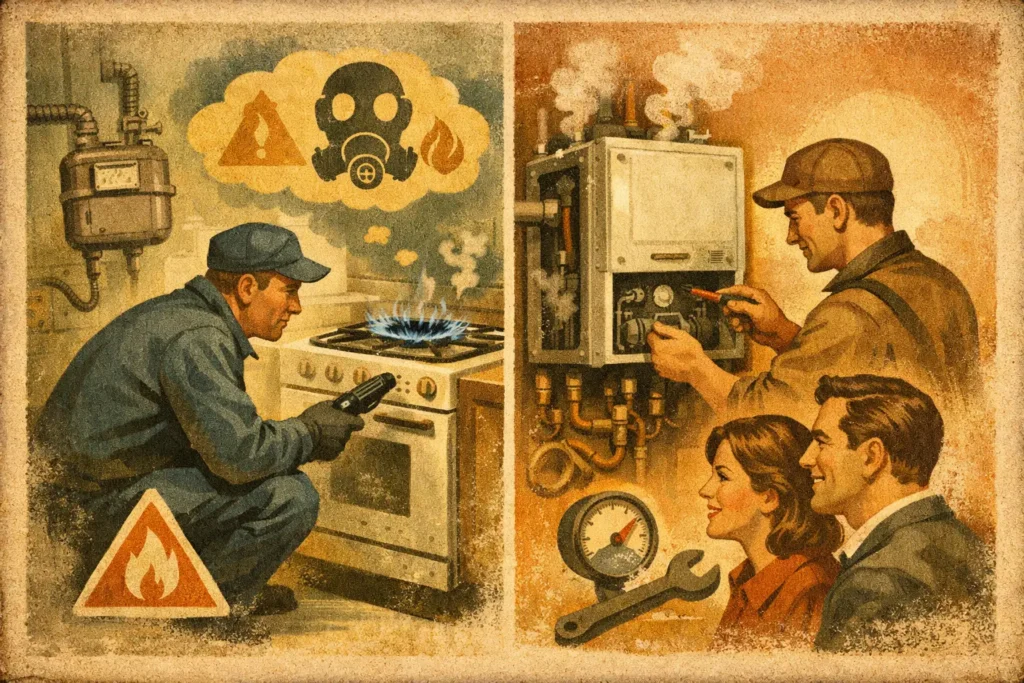
A boiler can heat your home perfectly well and still need attention. That is where confusion often starts. Gas safety versus boiler service is not a choice between two names for the same job. They have different purposes, different paperwork and, for landlords, different legal implications.
For homeowners, understanding the difference helps you keep your boiler efficient and spot when to call a qualified engineer. For landlords, it helps avoid a missed compliance deadline that could put tenants at risk and create serious problems. Here is the straightforward version.
What is a gas safety check?
A gas safety check is a formal inspection carried out by a Gas Safe registered engineer. Its main purpose is to confirm that gas appliances, pipework and flues are safe to use on the day of the visit.
The engineer will inspect relevant gas appliances, such as a boiler, gas fire or cooker where included in the appointment. They will check that appliances are installed correctly, have adequate ventilation, burn gas safely and remove combustion gases properly through the flue. They will also look for signs of unsafe operation, including gas leaks and incomplete combustion.
For a rented property in England, landlords must arrange a gas safety check at least every 12 months for gas appliances and flues they provide. Once the check is complete, the landlord receives a Gas Safety Record, often known as a CP12 certificate. A copy must be given to existing tenants within 28 days and to new tenants before they move in. Landlords should also keep their records for at least two years.
The legal duty sits with the landlord, even if a managing agent arranges the visit. Tenants should allow reasonable access, but it is the landlord’s responsibility to make sensible attempts to gain it and keep a record of those attempts.
Homeowners are not normally required by law to have an annual Gas Safety Record for their own property. Even so, an annual gas safety check can be a sensible extra precaution, particularly where there is an older gas fire, a gas cooker, or any concern about the condition of the installation.
What happens during a boiler service?
A boiler service focuses on the boiler itself. It is preventative maintenance, designed to keep the appliance working reliably, efficiently and safely between winters.
During a typical annual service, a qualified engineer checks the boiler’s operation and controls, examines key components, tests the flue and combustion, and looks for leaks, corrosion, unusual wear or faults developing inside the appliance. Depending on the model and its condition, this may include cleaning parts such as the condensate trap or burner area where appropriate.
The exact work varies by boiler make, model and age. A good service is not simply turning up, looking at the pressure gauge and leaving. It is an opportunity to find smaller issues before they become a no-heating emergency on a cold West Yorkshire morning.
An annual service can also matter for your manufacturer’s warranty. Many boiler warranties require servicing at the intervals set out by the manufacturer, usually once a year, and you may need evidence that it has been completed. Check the terms for your own boiler rather than assuming all warranties work the same way.
Gas safety check versus boiler service: the key difference
The simplest distinction is this: a gas safety check confirms whether gas appliances are safe, while a boiler service maintains the boiler and checks how well it is operating.
There can be overlap. A boiler service includes important safety checks, and a gas safety check may identify a boiler fault. But one appointment does not automatically count as the other. A landlord gas safety visit may not include the full maintenance work needed for a boiler service, while a boiler service does not automatically produce the formal Gas Safety Record required for a rental property.
If you are a landlord, ask clearly for both services where both are needed. Confirm that the engineer will issue the correct paperwork for the gas safety check and retain your boiler service record separately. This avoids the all-too-common assumption that an annual boiler visit has covered every requirement.
Do landlords need both every year?
In most cases, yes. The annual gas safety check is a legal requirement where a rental property has gas appliances or flues covered by the regulations. The boiler service is not the same statutory requirement, but it remains a practical part of looking after the property, reducing breakdown risk and meeting warranty conditions where applicable.
A poorly maintained boiler can mean a tenant without heating or hot water, an avoidable repair bill and a difficult call-out at the worst possible time. Regular servicing gives an engineer the chance to identify deterioration before it reaches that point.
There are situations where the timing can be made easier. If your gas safety check and boiler service are both due around the same time, booking them together can reduce disruption for tenants and make your records easier to manage. That does not mean the engineer should rush the work. It means you have one planned visit with the right scope agreed in advance.
Landlords should also remember that gas compliance is only one part of their responsibilities. Electrical safety checks and, where supplied appliances are involved, PAT testing may also be needed. Keeping these dates organised can feel like a lot, especially across several properties. A maintenance plan that brings cover and compliance support together can remove much of that administration.
What homeowners should arrange
For most homeowners, an annual boiler service is the starting point. It supports reliable heating, may protect your warranty and gives you a clear record of professional maintenance.
Consider an additional gas safety check if your home has several gas appliances, you have recently moved in, the property has an older installation, or you simply want reassurance that all relevant gas appliances and flues have been inspected. It can be especially worthwhile after building work near a flue or when replacing an appliance.
Do not wait for the annual appointment if something seems wrong. Book an engineer promptly if you notice any of the following:
- A yellow or orange flame instead of a crisp blue flame on a gas appliance.
- Soot, staining or scorch marks around an appliance.
- A pilot light that repeatedly goes out, unusual boiler noises or a boiler that regularly loses pressure.
- Headaches, dizziness or nausea that seem worse when an appliance is in use.
If you suspect a gas leak, smell gas, or think carbon monoxide may be present, act immediately. Turn off the gas supply if it is safe to do so, open doors and windows, leave the property, and contact the relevant emergency service. Do not use electrical switches, naked flames or appliances until the situation has been assessed.
A working carbon monoxide alarm is another sensible layer of protection, but it is not a replacement for professional inspection or servicing. Follow the manufacturer’s positioning and testing instructions, and replace the alarm by its expiry date.
Choosing the right engineer and keeping records
Whether you are booking a one-off visit or arranging ongoing cover, use an engineer who is Gas Safe registered and qualified for the type of appliance being inspected. Gas work is not a job for guesswork or a general handyman.
Keep your paperwork somewhere easy to find. Homeowners should retain boiler service records for warranty and future sale purposes. Landlords should keep the Gas Safety Record, proof of service, and a simple diary of future due dates. Photographing documents is useful, but make sure the image is clear and backed up.
For households and landlords who prefer predictable costs, No Hassle Heating offers local maintenance and breakdown cover across West Yorkshire, with annual boiler servicing included on relevant plans and support when an unexpected problem arises. The right level of cover depends on the age of your boiler, the systems you want protected and whether you manage a rental property.
Make the next appointment do the right job
When booking, do not just ask for “a boiler check”. Say whether you need a boiler service, a landlord gas safety check, or both. Provide the boiler make and model if you have it, mention any other gas appliances, and tell the engineer about faults or warning signs you have noticed.
That small bit of clarity means the visit can be properly planned, the correct checks can be completed and the right documents can be issued. It is a simple way to protect your heating, your tenants or household, and your peace of mind before a minor concern becomes an urgent problem.
