
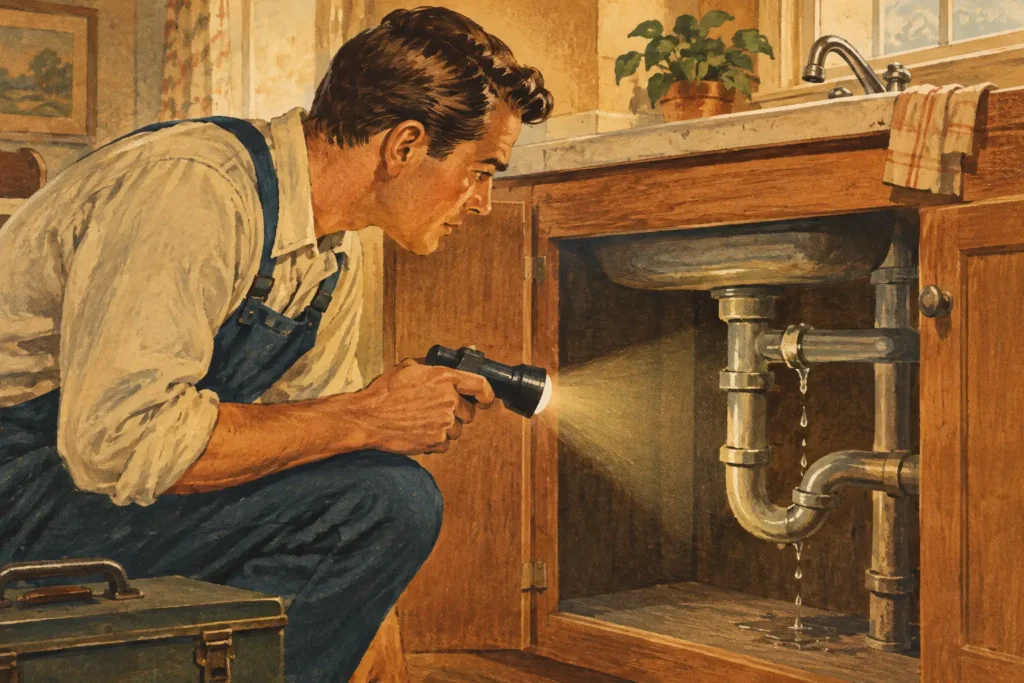
A small patch under the kitchen sink can be obvious. A slow leak beneath a floorboard, behind a boxed-in pipe or inside a wall is different. It can quietly raise your water bill, damage plaster and timber, and create the damp conditions mould needs to spread. Knowing how to find hidden leaks gives homeowners and landlords a chance to act before a minor plumbing fault becomes an expensive repair.
The signs of a hidden water leak
Hidden leaks rarely announce themselves with a dramatic burst pipe. More often, the clues are easy to dismiss until several appear at once. A musty smell in a cupboard, a new brown mark on the ceiling below a bathroom, bubbling paint or wallpaper, or a patch of flooring that feels warmer, colder or softer than the area around it can all point to unwanted water.
Keep an eye on your water use too. If your bill has increased but your household routine has not changed, water may be escaping somewhere you cannot see. The same applies if the water meter continues to move when every tap, appliance and toilet is switched off. This is one of the clearest early warning signs of a leak on the property.
For landlords, reports of condensation and mould should be taken seriously, but do not assume they are always caused by tenant habits. Poor ventilation is common, particularly in bathrooms and kitchens, yet a concealed plumbing leak can produce very similar symptoms. A prompt inspection protects the property and helps resolve the issue fairly.
How to find hidden leaks with a simple meter test
A water meter test is a useful first check where your property has a meter. It will not tell you exactly where the problem is, but it can confirm whether water is being lost while the property is still.
First, make sure no one is using water. Turn off taps, avoid flushing toilets, pause the washing machine and dishwasher, and check that outside taps are fully closed. Take a clear photo of the meter reading, then leave the water unused for at least 30 minutes. Longer is better if you can manage it.
Return to the meter and compare the reading. If the numbers have changed, or the small leak indicator is moving, there may be a leak between the meter and your internal pipework, or within the property itself. Do not use this test as a reason to delay action if you can already see water damage. In that situation, isolate the supply if it is safe to do so and arrange help.
Not every home has an accessible meter, and shared supplies can make the test less reliable. Flats, converted houses and some rental properties may need a professional assessment to identify the affected section of pipework.
Check toilets, taps and appliances first
Before assuming the leak is inside a wall, rule out the common causes. A toilet with a faulty flush valve can continuously trickle water into the pan without making much noise. Add a small amount of food colouring to the cistern and wait without flushing. If colour appears in the bowl, the toilet is leaking internally.
Look beneath sinks and around pipe joints for moisture, staining or corrosion. Run your hand around connections carefully, using dry kitchen roll to pick up small amounts of water. Check washing machine and dishwasher hoses, especially where they meet the appliance or supply valve. A loose connection may only drip while the machine is operating.
Also inspect the boiler area and visible heating pipework. A boiler pressure gauge that regularly drops, staining beneath the boiler, or a radiator valve that feels damp can indicate a fault. Central-heating leaks are not always obvious, and repeatedly topping up a pressurised system is not a fix. It can increase corrosion inside the system and should be investigated.
Places hidden leaks often start
Water follows gravity and travels along pipes, joists and cables, so the visible stain may not sit directly below the leak. A ceiling mark under a bathroom could come from a shower seal, a waste pipe, a toilet connection or a pipe beneath the floor. That is why guessing and cutting into walls can create more disruption than necessary.
The areas that deserve the closest attention are bathrooms, kitchens, utility rooms, boiler cupboards and any room beneath them. Pay particular attention to shower trays and bath edges. Failed sealant can let water pass behind a bath panel or through the floor every time the shower is used.
Outside, inspect external taps, overflow pipes and pipework exposed to cold weather. A frozen pipe can split and only become apparent when it thaws. Damp ground close to an outside wall, unexplained puddles during dry weather, or a constantly dripping overflow pipe all warrant a closer look.
In older West Yorkshire homes, pipework may run through solid walls, under suspended timber floors or within extensions added at different times. Access can be awkward, but the right diagnosis matters. A qualified engineer can use pressure testing, moisture readings and, where appropriate, specialist detection methods to narrow down the source without unnecessary damage.
When to turn off the water and call for help
If water is actively coming through a ceiling, pooling near electrical sockets, or flowing from a pipe or appliance connection, treat it as urgent. Turn off the stop tap if you can do so safely. Most are found beneath the kitchen sink, in a utility area, or close to where the mains water pipe enters the property. Every household should know where its stop tap is and test that it can be turned before an emergency happens.
Do not touch wet electrical fittings, switches or appliances. If water is near electrics, keep clear and arrange emergency support. Similarly, do not remove boiler casings or attempt repairs to sealed heating systems yourself. What looks like a minor leak can involve pressure, electrical components or gas-related equipment.
For a slow leak, you may be able to limit damage by placing a container beneath a visible drip, drying the area and avoiding use of the affected bathroom, tap or appliance. That is only a temporary measure. Damp materials can deteriorate quickly, particularly chipboard flooring, kitchen units and plasterboard.
No Hassle Heating provides practical plumbing and home emergency support for customers who want a clear route to help rather than a surprise call-out bill. For homeowners and landlords, having cover in place can make it easier to act at the first sign of trouble instead of waiting for a small issue to grow.
Landlords: act early and keep a clear record
A tenant may first notice a damp smell, a stain or a change in boiler pressure. Make it easy for them to report the problem quickly, ideally with photographs and details of when it appeared. Fast communication reduces damage and gives you a useful record of the issue and the action taken.
It is sensible to record inspections, repairs and any advice provided by an engineer. If a leak has affected a tenant’s living space, explain what will happen next and when. You may need to arrange drying, repairs to finishes or a follow-up visit after the source has been fixed. The immediate plumbing repair is essential, but it is not always the final step.
A landlord should also distinguish between a plumbing leak and condensation caused by everyday moisture. The remedy may involve repairs, extraction, heating controls or ventilation. In some properties, it is a combination of factors. A proper assessment prevents the wrong solution being applied.
Preventing the next hidden leak
You cannot prevent every pipe failure, particularly in older systems, but regular checks lower the risk of a surprise. Look under sinks every few months, keep appliance hoses in good condition, renew damaged silicone seals, and pay attention to changes in water pressure, boiler pressure or water bills.
During cold weather, keep the heating at a sensible background temperature in empty properties and make sure external pipework is protected. If you are leaving a property vacant for an extended period, consider the water supply, insurance requirements and whether someone can carry out occasional checks.
The best time to deal with a hidden leak is when the first clue appears. A quick meter check, a look around the usual problem areas and a call for qualified help when something does not add up can protect your home, your tenants and your budget.
