
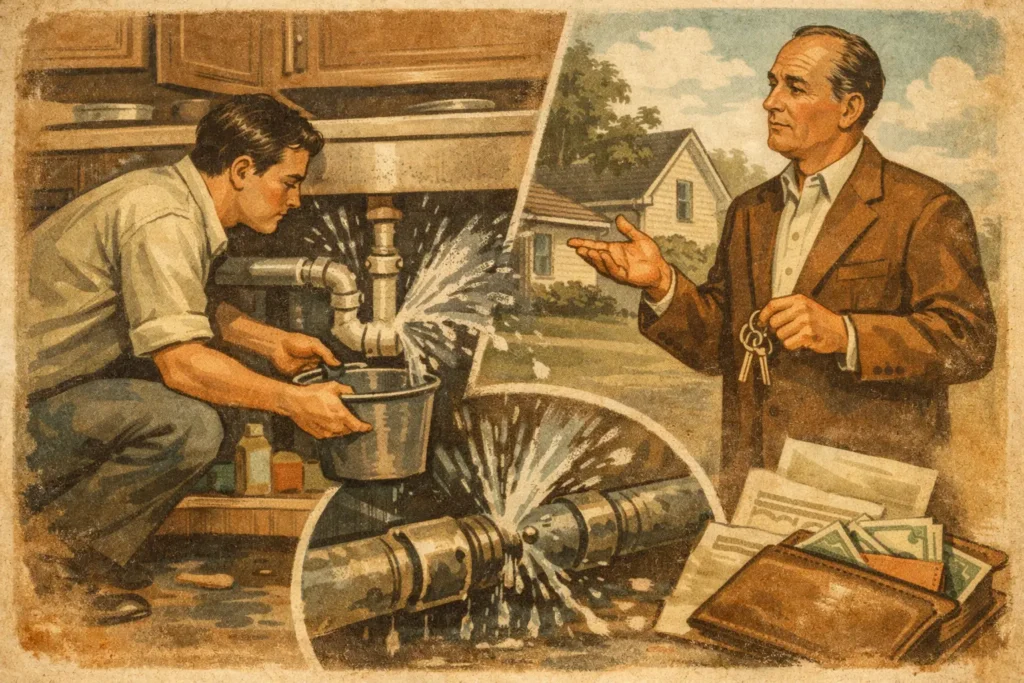
A burst pipe can turn a normal evening into a stressful emergency in minutes. Water can damage ceilings, flooring, furniture and electrics, so the first question is usually practical: who pays burst pipe repairs? The answer depends on whether you own or rent the property, what caused the pipe to burst and the cover or insurance in place.
The priority is always stopping the damage safely. Once the immediate risk is under control, it is much easier to establish responsibility and arrange the right repair without unnecessary delay.
Who pays burst pipe repairs for homeowners?
If you own your home, you will normally be responsible for repairing the burst pipe and any damage to your property. That includes pipework inside your home, such as pipes beneath sinks, behind appliances, in lofts or under floors.
Home insurance may help with the cost, but it depends on your policy. Many buildings insurance policies cover escape of water, which can include damage caused when a pipe suddenly bursts. The policy may pay towards repairing damaged plaster, ceilings or flooring, but not always the cost of fixing the pipe itself. Some insurers treat the failed section of pipe as maintenance, particularly where wear, corrosion or poor installation is the cause.
There may also be an excess to pay. Before making a claim for a smaller leak, compare the likely repair bill with your excess and consider whether a claim could affect future premiums. For major water damage, contacting your insurer promptly is usually the sensible route.
A home emergency or plumbing cover plan can make the immediate situation far less daunting. Rather than searching for an available plumber while water is spreading, you have a clear route to request an emergency call-out and get the fault assessed. Always check what your particular plan includes, as limits, exclusions and pre-existing faults can vary.
Who pays burst pipe repairs in rented property?
For most rented homes, the landlord is responsible for repairing the fixed water supply pipework. Landlords have a legal duty to keep the structure and exterior of the property in repair, along with installations that supply water, gas, electricity, heating and sanitation. In plain terms, a pipe bursting through no fault of the tenant will usually be the landlord’s repair responsibility.
That does not mean tenants should wait quietly for the problem to worsen. Report the burst pipe or serious leak to the landlord or letting agent straight away, preferably in writing as well as by phone. Take clear photos or short videos of the source of the leak and the damage, and keep a record of when you reported it.
A tenant may be liable where their actions caused the damage. Examples could include drilling into concealed pipework, leaving a property unheated for a long period during freezing weather against clear tenancy instructions, or attempting a repair that makes the issue worse. Responsibility is not automatic, though. The circumstances matter, and the landlord should establish the cause before making deductions or asking a tenant to pay.
If a tenant’s own belongings are damaged, the landlord’s buildings insurance will not normally replace them. That is what contents insurance is for. Equally, a landlord’s policy may cover damage to the building and landlord-owned items, subject to the policy terms and excess.
What landlords should do after a pipe bursts
A fast response protects the property, the tenant and your costs. Ask the tenant to turn off the internal stopcock if it is safe to do so, then arrange an urgent plumbing visit. If water has reached electrical fittings, advise the tenant not to touch switches or appliances in the affected area and seek qualified help.
It is worth documenting the condition of the property, the reported issue and the repair work completed. This can help with an insurance claim, support clear communication with the tenant and show that you acted promptly. For landlords managing several homes, having a single maintenance arrangement for plumbing, heating and key safety services can remove a great deal of last-minute administration.
No Hassle Heating provides domestic and landlord-focused cover across West Yorkshire, with 24/7 emergency call-outs and plans designed to make unexpected plumbing and heating problems more manageable. Check the plan details before taking cover so you know exactly what support applies to your property.
What if the burst pipe is outside the home?
The location of the leak can change who is responsible. Pipework inside your property boundary is often the homeowner’s or landlord’s responsibility, while a leak in the water main in the road is generally for the water company to investigate.
The dividing line is not always obvious. Some properties have shared supply pipes, older pipe layouts or external pipes serving an outbuilding. If you can see water pooling in the street, pavement or road, report it to the water supplier. If the leak is on your land, a plumber can identify whether it is a private supply pipe and explain the repair options.
For flats, responsibility may sit with the freeholder or managing agent where the burst pipe serves communal areas or multiple homes. A pipe that serves only one flat may be the leaseholder’s responsibility instead. Check the lease and notify the managing agent immediately, especially if water is affecting another property.
Does insurance cover a burst pipe?
Insurance can be helpful, but it is not a substitute for acting quickly. Insurers expect reasonable steps to reduce further damage, such as turning off the water supply, moving belongings away from the leak where safe and arranging emergency repairs.
Buildings insurance commonly covers the resulting water damage from a sudden escape of water. Contents insurance may cover damaged belongings. However, policies often exclude gradual deterioration, poor maintenance, frost damage where reasonable precautions were not taken, and the cost of replacing worn pipework. Trace and access cover can also vary. This is the part of a policy that may help cover the cost of finding a hidden leak behind walls or beneath floors.
Do not throw away damaged items or start extensive reinstatement work before speaking to your insurer, unless urgent work is needed to make the property safe or prevent further harm. Keep receipts for emergency repairs, photographs of the damage and notes of all conversations.
What to do when a pipe bursts
A burst pipe needs calm, practical action. If you are unsure where your stopcock is, find it before an emergency happens. It is often under the kitchen sink, near the water meter, in a utility area or close to where the water supply enters the property.
- Turn off the water at the internal stopcock if it is safe to reach. Turn off the heating system too if the burst pipe is part of the central heating.
- Switch off electricity at the consumer unit if water is near sockets, lights or electrical equipment. Do not touch wet electrical items.
- Move possessions away from the water, use towels or containers to limit spread and open taps to drain remaining water from the pipes.
- Call your landlord, letting agent, insurer, home emergency provider or an emergency plumber, depending on your circumstances. Explain where the leak is, whether water is still flowing and whether electrics are affected.
Avoid patching a serious leak with tape or attempting pipework repairs unless you are confident it is safe. A temporary fix can fail, hide the true fault and create more water damage later.
Reducing the risk of frozen and burst pipes
Cold snaps are a common trigger for burst pipes in West Yorkshire, particularly in empty homes, loft spaces, garages and external pipework. Keep the heating on at a low background temperature during freezing weather, even if you are away. Insulate exposed pipes and water tanks where appropriate, and fix small drips before winter because standing water can freeze.
Landlords should make tenants aware of the stopcock location and provide a clear emergency contact route. Homeowners should also arrange regular boiler servicing and deal with signs of trouble early, such as unexplained drops in boiler pressure, damp patches, banging pipes or reduced water flow.
When water starts coming through a ceiling or across a floor, the question of payment can wait a few minutes. Stop the water, protect people and the property, report the problem quickly, then make sure the repair is properly diagnosed. That is the best way to limit the damage and get your home back to normal.
